A Clerical Error Sent a Fortune to the Wrong Town — and the Wrong Town Built a Library With It
There's a particular kind of bureaucratic chaos that only becomes visible in hindsight, when you can trace the exact moment a small mistake set off a chain of events that nobody planned and everyone eventually had to live with. This is one of those stories.
It involves a dead woman's estate, two towns with nearly identical names, a county clerk who was working too fast, and a public library that technically should not exist.
The Inheritance Nobody Expected
In the early 1920s, a wealthy widow in rural Ohio passed away without direct heirs. Her will, drawn up years earlier, left the bulk of her estate — somewhere in the range of what would today be several hundred thousand dollars — to the township she had grown up in, designated for "public improvement and the betterment of community life."
The executor of the estate, a probate attorney in Columbus, set about distributing the funds. The process was largely routine: property was liquidated, debts were settled, and a substantial check was prepared and mailed to the appropriate township treasurer.
Except the attorney's clerk, copying the recipient's address from a handwritten document, misread a single letter in the township's name. The check went to a different township — a neighboring community that happened to share the first five letters of its name with the intended recipient.
Both townships were small. Both had overworked local administrators. The receiving township's treasurer, a part-time position held by a local farmer named Harold Greer, received the check, noted that it was made out to what appeared to be a reasonable variant of his township's name, and deposited it.
The Money Finds a Purpose
What happened next is the part that makes this story worth telling.
The township that received the windfall had been quietly lobbying for years to establish a public lending library. The nearest library was more than twenty miles away, accessible only to residents with reliable transportation — which, in rural Ohio in the 1920s, was not everyone. A local schoolteacher named Edith Calloway had spent the better part of a decade writing letters to the county board requesting funds, organizing bake sales, and generally making herself a cheerful nuisance in the service of literacy.
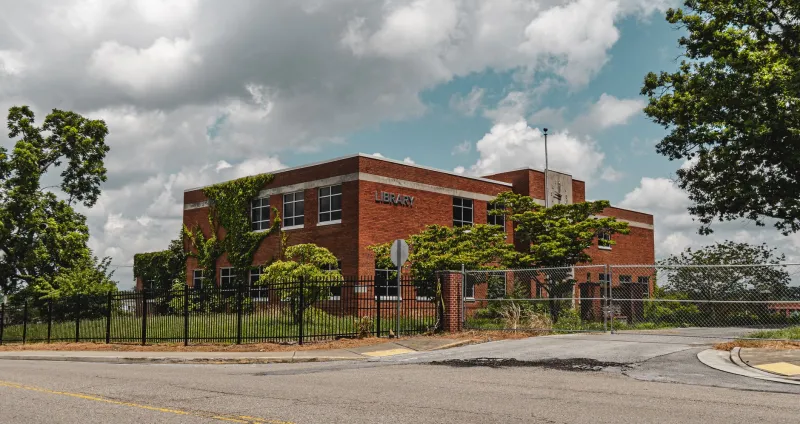
When the unexpected bequest arrived, the township trustees voted — with what the meeting minutes describe as "unanimous enthusiasm" — to allocate the funds toward constructing a library building and stocking it with an initial collection. Within two years, the Calloway Township Public Library opened its doors. Edith, who had not yet retired, became its first librarian.
The library served the community for decades, expanding its collection, hosting reading programs for children, and becoming exactly the kind of modest, irreplaceable civic institution that people only notice when it's threatened with closure.
When Someone Did the Math
The error wasn't discovered until the late 1940s, when a historian compiling records of the original widow's estate noticed the discrepancy between the will's stated beneficiary and the actual disbursement records. He brought it to the attention of the county probate court, which brought it to the attention of both townships, which brought it to the attention of a small army of lawyers.
The intended recipient township — which had spent nearly three decades assuming the money had simply been tied up in estate proceedings and never formally pursued it — now found itself holding a legitimate legal grievance. The money had, by any reasonable reading of the original will, been theirs.
The township that had built the library, meanwhile, had a functioning public institution, an attached sense of community identity, and absolutely no money to repay a decades-old windfall.
The Legal Tangle Nobody Wanted to Win
What followed was a quietly extraordinary episode in small-town Ohio jurisprudence. The intended recipient township filed a formal claim. The library township responded. Lawyers argued about the doctrine of unjust enrichment, about good-faith receipt of funds, about whether a community institution that had served thousands of residents over twenty-five years could be considered "damages" in any meaningful sense.
The case dragged through county court for several years. Witnesses included Edith Calloway herself, by then in her seventies, who reportedly testified with considerable composure that she was not in the habit of returning books that had already been read.
The settlement, reached in 1952, was almost comically reasonable: the library township agreed to name a reading room after the original intended beneficiary — the widow whose estate had funded the whole accidental enterprise — and to open library access to residents of the neighboring township free of charge in perpetuity. The intended recipient township, for its part, agreed to drop its financial claims.
Everybody went home. The library stayed.
The Footnote That Outlasted the Error
The reading room naming lasted for decades. Whether the free-access agreement survived subsequent administrative reorganizations is unclear — Ohio townships have a way of merging and restructuring in ways that render old agreements technically moot — but the library itself persisted well into the modern era.
What makes the whole episode genuinely strange is how cleanly it defies the usual logic of bureaucratic mistakes. Most clerical errors produce inconvenience, financial loss, or years of frustrating correction. This one produced a library. A real, functioning, beloved community library, built on a foundation of misread handwriting and a farmer-treasurer who didn't look too closely at the payee line.
Edith Calloway's letters to the county board had gone nowhere for ten years. One tired clerk's copying mistake accomplished in an afternoon what a decade of proper channels couldn't.
Somewhere in there is probably a lesson about bureaucracy. Or maybe just about luck.