The Man Who Stole His Own Patent — And Didn't Know It
The Man Who Stole His Own Patent — And Didn't Know It
Here's a sentence that shouldn't be possible: a man once competed against himself in the American patent system — filed against his own prior invention, won, and had no idea any of it was happening.
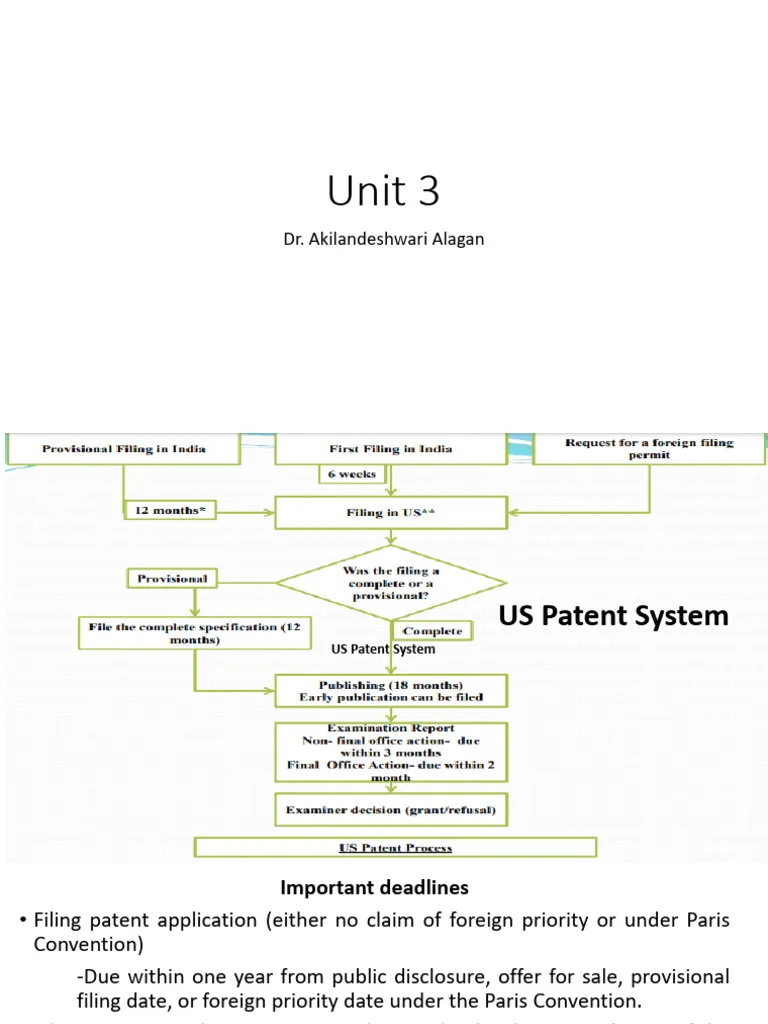 Photo: American patent system, via imgv2-1-f.scribdassets.com
It sounds like the setup for a courtroom comedy. But in the sprawling, ink-stained bureaucracy of the U.S. Patent Office during the late 1800s, it was just another Tuesday.
 Photo: U.S. Patent Office, via www.saturdayeveningpost.com
A System Built on Paper and Prayer
To understand how this happened, you have to understand what the U.S. Patent Office looked like before the 20th century arrived to clean things up. There was no centralized digital index, no keyword search, no automated cross-referencing. Patent examiners worked from physical files stacked in rooms that were — charitably — organized. Applications arrived by mail, written in longhand, and were categorized by subject class. If your description of an invention was worded differently enough from a prior filing, an examiner might never connect the two.
Add to that the common 19th-century practice of inventors giving their devices different commercial names depending on the market they were targeting, and you had a recipe for exactly the kind of confusion that eventually played out.
The inventor at the center of this story — whose identity historians have pieced together through Patent Office correspondence archives — had developed a mechanical fastening device in the early 1870s. He filed a patent, received it, and moved on. Life happened. He relocated, changed business partners, and spent years working on unrelated projects. When he returned to a variation of the same basic mechanism roughly a decade later, he genuinely believed he was starting fresh. The original patent, filed under a slightly different name for the device and through a different patent agent, had faded from his memory entirely.
The Office Approved It — Twice
His second application sailed through. The examiner assigned to it worked from a different subject classification than the one housing the original filing, and the language used to describe the mechanism's function was distinct enough that no flag was raised. Both patents sat in the system, legally valid, officially unrelated, assigned to the same human being who had no idea he was now the proud owner of two government-endorsed claims to the same core idea.
For a while, nothing happened. The inventor licensed the second patent to a manufacturer. That manufacturer eventually ran into a competitor who had, in the meantime, discovered the original patent and licensed that one — also from the inventor, though through an intermediary who hadn't done sufficient homework. Suddenly, two companies were producing nearly identical products, both operating under licenses they believed were exclusive, both technically backed by the same man's intellectual property.
When the legal dispute surfaced, the inventor's own attorneys had to break the news to him: he had, in effect, been his own competition.
The Untangling
What followed was less a courtroom drama than a slow administrative headache. The Patent Office, once the duplication was formally identified, faced a procedural problem it wasn't well-equipped to handle. The rules governing interference proceedings — the process by which conflicting patents were adjudicated — were designed for disputes between different inventors, not for a single inventor who had accidentally filed against himself.
The resolution took years. Attorneys argued over which patent took precedence, whether the second filing constituted an implicit abandonment of the first, and how licensing agreements made under each patent should be treated. Courts during this era weren't much faster than the Patent Office, and the case meandered through the system well into the following decade.
In the end, the original patent was ruled the controlling document. The second was formally subordinated to it, its claims narrowed to cover only the specific refinements the inventor had introduced in his later version. The manufacturers who'd been fighting each other — both technically operating on the same man's authority — reached a settlement and went back to work.
Why This Keeps Happening
The remarkable thing isn't that this happened once. Patent historians note that self-collision — inventors unknowingly duplicating their own prior work — was a recurring feature of the 19th-century system. The sheer volume of applications, combined with inconsistent naming conventions and the total absence of automated search tools, meant that the Patent Office was essentially operating on the honor system. If an inventor didn't remember his own prior filings, there was a real chance the office wouldn't catch it either.
Reforms in the early 20th century — better indexing, stricter prior-art searches, the eventual introduction of examiner cross-referencing requirements — dramatically reduced the frequency of these cases. But they didn't eliminate the underlying human element: memory is imperfect, paperwork is dull, and a decade is a long time to remember something you filed once and forgot about.
The story endures as a perfect artifact of a specific moment in American institutional history — when the country's appetite for invention vastly outpaced its capacity to keep track of what it had already invented. A man built something, forgot he built it, built it again, and then spent years in court arguing with the ghost of his younger self.
The Patent Office, for its part, processed everything correctly both times. Which, depending on how you look at it, is either a testament to the system's consistency or a pretty damning indictment of its limitations.