When Numbers Lied: The Tennessee County That Collected Pocket Change for Three Decades
The Ledger That Broke a County
In 1884, Rutherford County, Tennessee, should have been swimming in tax revenue. The fertile farmlands surrounding Murfreesboro were producing record cotton and tobacco crops, and property values were soaring as the railroad brought new commerce to the region. Instead, the county government was perpetually broke, scrambling to maintain basic services while neighboring counties with far less valuable land somehow managed to fund proper schools and paved roads.
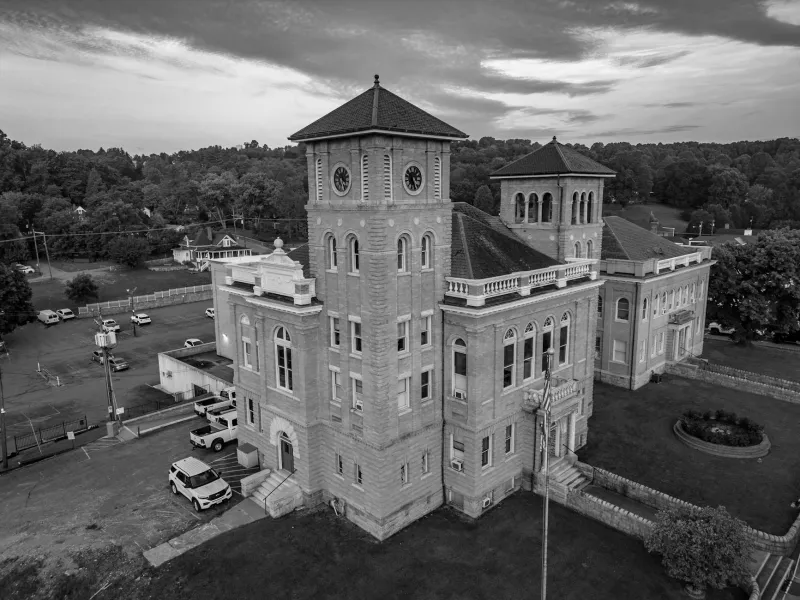
 Photo: Rutherford County, Tennessee, via www.spectratech.gr
The mystery would persist for three decades, creating a cascade of consequences that touched every resident's life. The answer lay hidden in a single column of numbers in the county tax assessor's office—numbers that were quietly bankrupting one of Tennessee's most prosperous regions.
A Decimal Point's Devastating Journey
County Tax Assessor William Hartwell was known for his meticulous record-keeping, which makes what happened next all the more remarkable. When recording property valuations for the 1884 tax year, Hartwell made a seemingly insignificant error: he consistently entered assessed values in the wrong column of his ledger. What should have been recorded as full property values were instead logged as the taxable portion after exemptions.
 Photo: William Hartwell, via s3.ppllstatics.com
The result was catastrophic. A farm worth $5,000 that should have generated $150 in annual taxes was instead assessed as if it were worth $500, producing just $15 in revenue. Across thousands of properties, the county was collecting roughly one-tenth of its legally owed tax revenue.
The Puzzle of Perpetual Poverty
For residents, the effects were mystifying rather than obvious. Roads that should have been maintained with ample funding instead developed potholes that went unfilled for years. The county courthouse began leaking during rainstorms, but repairs were constantly delayed due to "budget constraints." Most puzzling of all, the local schools struggled to afford basic supplies despite serving children from some of the wealthiest farming families in Middle Tennessee.
County commissioners found themselves in an impossible position. They could see the prosperity around them—bustling markets, new businesses, expanding farms—but their budget ledgers told a different story. Property owners paid their taxes without complaint, seemingly unaware that their contributions were a fraction of what the law required.
The Cover-Up Nobody Planned
What makes this story particularly strange is that the error wasn't discovered because it was actively concealed—quite the opposite. The tax records were public documents, available for inspection by anyone who cared to look. But the very nature of bureaucracy worked to hide the mistake. Property owners received tax bills that seemed reasonable compared to neighboring counties, so they didn't complain. County officials, overwhelmed by their perpetual budget crisis, focused on making ends meet rather than auditing assessment procedures.
Meanwhile, Hartwell continued using the same flawed system year after year. What began as a simple mistake became institutionalized practice as successive clerks followed established procedures without questioning the underlying methodology.
Discovery Through Desperation
The error finally came to light in 1914, not through careful auditing but through sheer desperation. Faced with a critical shortage of funds needed to repair flood damage, County Commissioner James Morrison decided to conduct a comprehensive review of the tax system to identify additional revenue sources.
Morrison's investigation revealed the stunning truth: for thirty years, Rutherford County had been operating on roughly 10% of its intended budget. The discovery led to a frantic recalculation of property values and a gradual adjustment of tax rates to reflect actual assessments.
The Reckoning
The correction process proved almost as complicated as the original error. County officials couldn't simply demand thirty years of back taxes from residents who had unknowingly benefited from the mistake. Instead, they implemented a gradual adjustment system that slowly brought tax collections in line with actual property values over several years.
The infrastructure deficit took even longer to address. Roads that had deteriorated for decades required massive investment to bring up to standard. Schools that had operated with minimal resources needed complete overhauls of their facilities and programs.
Legacy of a Ledger Line
By the time the error was fully corrected in the early 1920s, an entire generation of Rutherford County residents had lived with the consequences of Hartwell's misplaced numbers. The county's development had been stunted for thirty years, creating a gap with neighboring regions that took decades more to close.
Perhaps most remarkably, the mistake highlights how complex systems can perpetuate errors through their very complexity. No single person was responsible for catching the mistake because no single person had a complete view of how the system was supposed to work. Property owners, tax officials, and county commissioners each saw only their piece of the puzzle, never recognizing that the pieces didn't fit together properly.
Today, Hartwell's error serves as a cautionary tale about the hidden power of bureaucratic procedures—and how a single misplaced decimal point can quietly reshape an entire community's destiny for generations.