Every Single Year for 47 Years, This Vermont Town Mailed the Same Complaint to Congress
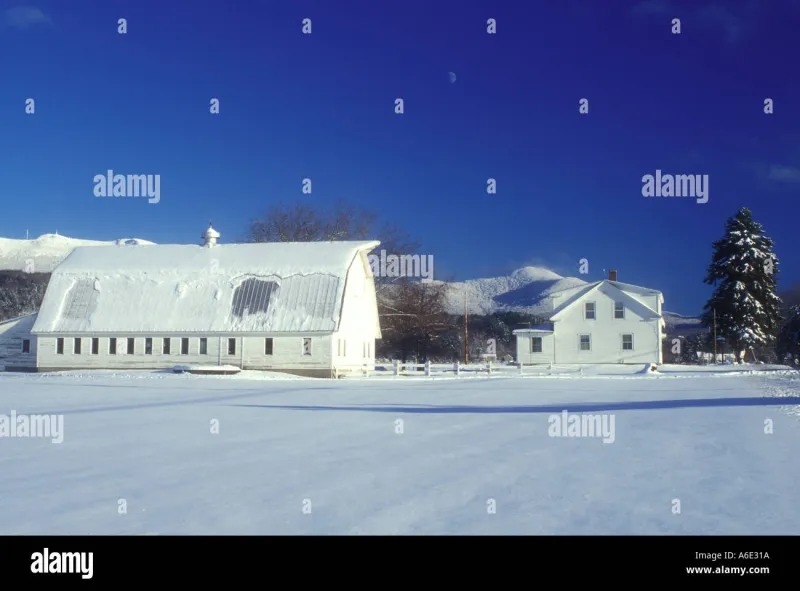
Photo: vintage Vermont rural town hall post office New England winter, via c8.alamy.com
Somewhere in the archives of the United States Congress, if you know where to look, there are forty-seven versions of essentially the same letter. Same complaint. Same request. Same town. Different year typed at the top, and occasionally a different signature at the bottom when the original letter-writer died and someone else picked up the pen. But the same letter, year after year, from 1919 to 1966, addressed to Washington and — for forty-six of those forty-seven years — received in total silence.
 Photo: United States Congress, via cdn.thecollector.com
The town was small, the grievance was specific, and the persistence was, by any reasonable measure, one of the most extraordinary acts of bureaucratic stubbornness in American civic history.
How a Postal Boundary Dispute Becomes a 47-Year Saga
The dispute itself was, in the grand scheme of things, minor. In the years following World War One, the U.S. Postal Service undertook a reorganization of rural mail routes across New England, consolidating delivery zones and redrawing the boundaries that determined which post office served which community.
 Photo: New England, via newstalknewengland.com
For most towns, the reorganization was invisible. For this particular Vermont municipality — a small farming community of a few hundred residents in the state's rural interior — it created a practical problem that nobody in the postal hierarchy seemed interested in fixing. The redrawing placed a portion of the town's residents in a mail delivery zone serviced by a post office in a neighboring community. This meant longer delivery times, occasional misdirected packages, and the particular indignity of having your mail officially belong to somewhere you did not live.
The town selectmen wrote to Congress in 1919 to explain the problem and request a correction. The request was, by all accounts, reasonable, clearly articulated, and completely ignored.
So they wrote again in 1920.
The Machinery of Civic Stubbornness
What happened next is a masterclass in how institutions — even tiny, informal ones — develop momentum that outlasts the original humans who created them.
The town's first letter-writer, a selectman who had taken the postal matter personally, continued writing every year throughout the 1920s. When he died in the early 1930s, he had apparently made clear to his successor that the annual letter was simply something the town did. It had, by that point, become a tradition — not a celebrated one, not one that anyone outside the town hall was aware of, but a tradition nonetheless.
Through the Great Depression, when the federal government was occupied with rather larger concerns, the letter went out. Through World War Two, when the postal service was genuinely overwhelmed with wartime logistics, the letter went out. Through the postwar boom, through Korea, through the early years of the space program and the Kennedy administration, the letter went out.
By the 1960s, the town's civic leadership had largely forgotten the specifics of the original dispute. What they knew was that there was a letter, it went to Congress every year, and it was their job to send it. The institutional memory of why had blurred at the edges; the institutional memory of that this is what we do remained perfectly intact.
This is, it turns out, exactly how bureaucracies work — including the small, informal, volunteer-run bureaucracies of rural New England town governments.
The Accidental Response
In 1966, a junior aide in a congressional office — the specific office and the aide's name have been lost to the imprecision of mid-century administrative recordkeeping — was working through a backlog of constituent correspondence that had accumulated during a period of staff transition.
The letter from the Vermont town landed on his desk. He read it. He found it clearly written and reasonable. He had no idea it was the forty-seventh version of the same letter, or that it represented nearly five decades of unanswered correspondence. He simply saw a constituent complaint about a postal boundary issue and did what congressional aides are theoretically supposed to do: he looked into it, determined that the complaint had merit, and forwarded it to the appropriate postal authorities with a request for review.
The postal authorities, faced with an official congressional inquiry, conducted the review. They found that the original reorganization had, in fact, created an unnecessary administrative complication for the affected residents. The boundary was adjusted. The correction that the town had been requesting since Woodrow Wilson was in the White House was implemented within a few months of the aide's letter.
The town received confirmation of the resolution in late 1966. By all accounts, the reaction was less triumphant than you might expect. Forty-seven years of letter-writing had created a certain detachment from the outcome. The problem was fixed. The letter-writing tradition ended. Life continued.
What Persistence Actually Looks Like
It's tempting to read this story as a parable about the rewards of persistence — keep asking, and eventually someone will answer. But that's probably the wrong lesson, because the town's success had almost nothing to do with the cumulative weight of forty-seven letters. It had everything to do with one aide clearing a backlog on an otherwise ordinary afternoon.
The real story is stranger and more interesting than a simple persistence narrative. It's a story about how institutions — governmental and civic alike — can sustain behaviors long after anyone remembers why those behaviors started. The town kept writing because writing was what the town did. Washington kept not responding because not responding was what Washington did. And for forty-six years, those two institutional inertias simply coexisted, each one perfectly balanced against the other.
It took an accident — a junior staffer with a backlog and no institutional memory of his own — to break the stalemate.
Somewhere in Vermont, if the town records survived, there are forty-seven copies of essentially the same letter. The forty-eighth was never written. There was nothing left to say.