The Two-Minute Afterthought That Became America's Greatest Speech
The Day America Got Its Priorities Backwards
On November 19, 1863, thousands of people traveled to Gettysburg, Pennsylvania, for what promised to be the oratorical event of the decade. They came to hear Edward Everett, the most celebrated public speaker in America, deliver what everyone knew would be a masterpiece of commemorative rhetoric. What they got instead was one of history's greatest lessons in how spectacularly wrong an audience can be about what they're witnessing.
 Photo: Edward Everett, via www.capfun.com
 Photo: Gettysburg, Pennsylvania, via modoniq.com
Lincoln's famous address? That was just the warm-up act nobody particularly wanted to hear.
 Photo: Abraham Lincoln, via i.pinimg.com
The Headliner Everyone Forgot
Edward Everett was the 19th-century equivalent of a rock star, if rock stars spent two hours discussing classical literature and constitutional theory. The former Harvard president, Massachusetts governor, and secretary of state was renowned for speeches that combined scholarly depth with theatrical flair. When organizers planned the Gettysburg cemetery dedication, Everett was the obvious choice for the keynote address.
They gave him two months to prepare. He spent them crafting a sweeping historical narrative that traced American democracy from ancient Athens through the current crisis. His speech would place the Civil War in the grand context of human civilization's struggle for self-governance.
Lincoln, by contrast, was invited almost as an afterthought. The president would offer "a few appropriate remarks" to formally dedicate the cemetery. Nobody expected much—certainly not anything that would compete with Everett's scholarly tour de force.
The Speech Everyone Paid to Hear
When Everett took the podium that November afternoon, he delivered exactly what the crowd expected: a masterful, meticulously researched, two-hour exploration of democracy, sacrifice, and national purpose. He spoke without notes, weaving together references to Pericles, the Founding Fathers, and the specific battles that had made Gettysburg hallowed ground.
The audience was transfixed. Newspapers the next day printed Everett's entire speech, praising its eloquence and historical sweep. The Chicago Tribune called it "one of the most beautiful and impressive deliverances ever uttered on such an occasion." The Philadelphia Inquirer devoted nearly two full pages to reproducing Everett's words.
This was what people had traveled hundreds of miles to hear. This was the speech that would be remembered.
The Footnote That Changed History
Then Lincoln stood up.
In less than three minutes, the president delivered 272 words that reimagined the entire purpose of the war and redefined American democracy. He didn't compete with Everett's scholarly approach—he transcended it entirely, creating something that was part poem, part prayer, part political manifesto.
But the crowd barely noticed. Many were still settling back into their seats after Everett's marathon performance. Some were checking their pocket watches, eager to catch afternoon trains. The brevity that makes the Gettysburg Address so powerful today struck many listeners as disappointingly brief.
Most newspapers buried Lincoln's remarks in small paragraphs, if they mentioned them at all. The Harrisburg Patriot-Union dismissed the president's speech as "silly remarks," while other papers focused entirely on Everett's address.
When History Rewrites the Program
Within a generation, something extraordinary happened. Everett's carefully crafted masterpiece—the speech everyone had paid to hear—began fading from public memory. Meanwhile, Lincoln's "few appropriate remarks" were being memorized by schoolchildren and carved into monuments.
The inversion was so complete that by the 1890s, most Americans couldn't have told you Edward Everett's name, much less quoted a single line from his Gettysburg address. But they could recite "Four score and seven years ago" from memory.
Everett himself seemed to understand what had happened. The day after the dedication, he wrote to Lincoln: "I should be glad if I could flatter myself that I came as near to the central idea of the occasion in two hours as you did in two minutes."
The Audience That Missed the Point
What makes this story particularly remarkable is how thoroughly the original audience misjudged what they were witnessing. This wasn't a case of a speech growing in reputation over time—it was a complete reversal of historical judgment.
The people who were there, the newspapers that covered it, the critics who analyzed it—they all got it wrong. They were so focused on the elaborate performance they'd expected that they missed the revolutionary moment happening right in front of them.
Lincoln had essentially rewritten the American story in three paragraphs, transforming a dedication ceremony into a redefinition of national purpose. But the audience was still thinking about Everett's classical references.
The Speech That History Remembered
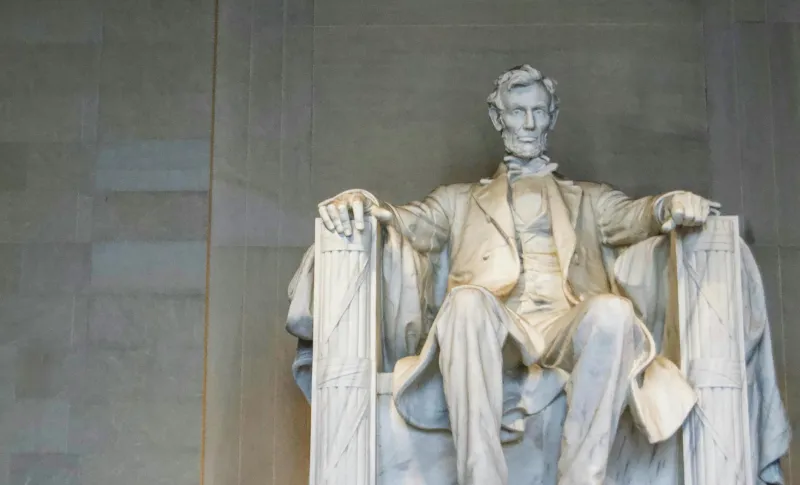
Today, the Gettysburg Address is considered one of the greatest speeches in human history. It's studied in schools worldwide, quoted by politicians, and inscribed on the Lincoln Memorial. Everett's two-hour masterpiece, meanwhile, is remembered primarily as the speech that happened before the speech everyone remembers.
The cemetery dedication that day featured two addresses: one that gave the audience exactly what they expected, and one that gave them something they didn't know they needed. History chose the unexpected one.
It's a perfect reminder that sometimes the most important moments are the ones we almost overlook—and that the main event isn't always the one listed first on the program. Sometimes it's the brief afterthought that changes everything.