The Block That Burned Twice: A Town's Stubborn Dance with Disaster
When History Becomes a Broken Record
There's an old saying that those who don't learn from history are doomed to repeat it. But what happens when a town learns from history, acknowledges the lesson, and then proceeds to ignore it completely? You get Crestwood, Montana—a place where the same city block burned down twice in 36 years, for precisely the same reason, despite everyone involved knowing exactly how to prevent it.
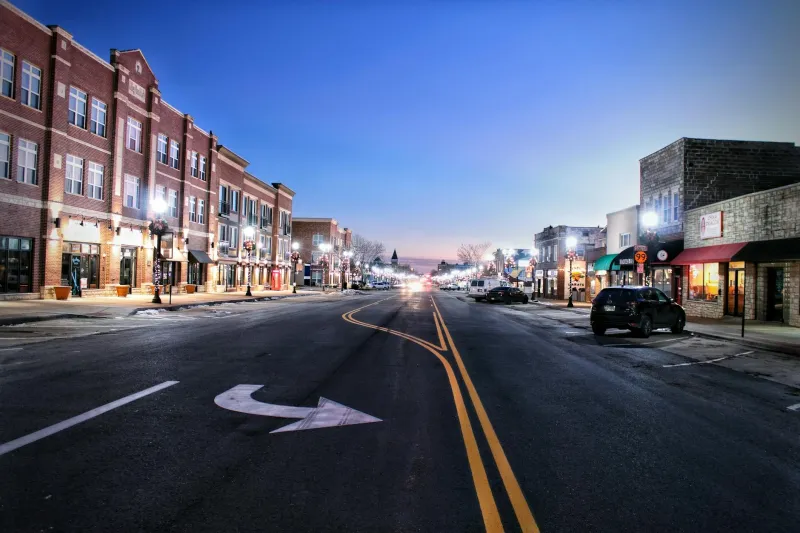
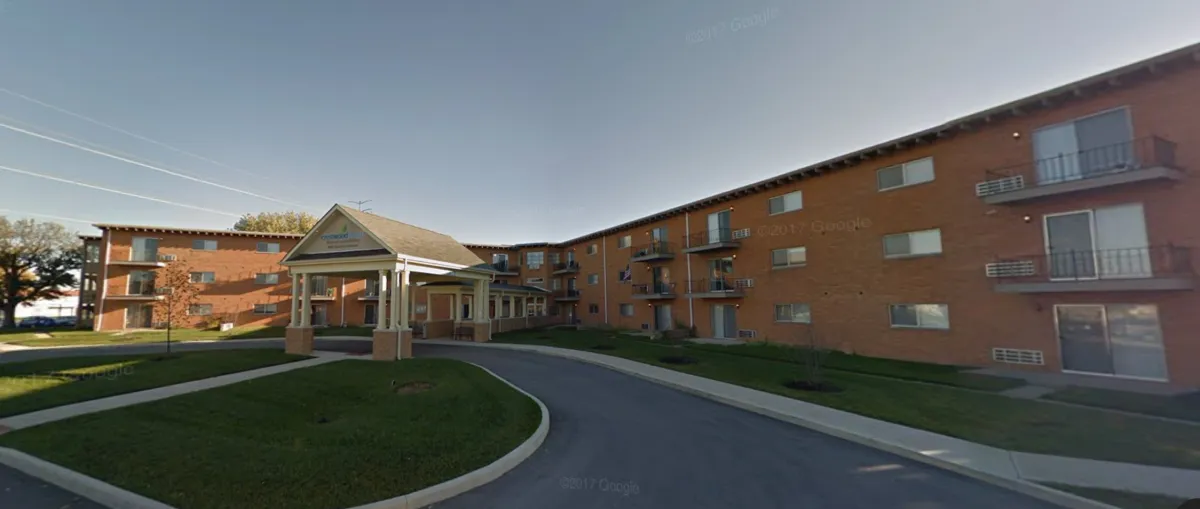 Photo: Crestwood, Montana, via www.morningside-group.com
This isn't a story about bad luck or acts of God. It's a story about human nature, economic pressure, and the peculiar American optimism that says "it won't happen again" even when all evidence suggests it absolutely will.
The First Fire: A Lesson Written in Smoke
The trouble began on September 14, 1887, when Crestwood was still a rough-and-tumble mining town with more ambition than sense. The commercial district consisted of a single block of wooden buildings connected by shared walls—a common design that maximized space but created what fire safety experts now call "a matchstick waiting for a spark."
The spark came from Heinrich's Bakery, where owner Gustav Heinrich had installed a new coal-fired oven without properly insulating the brick chimney from the wooden wall behind it. The chimney, built on the cheap using local clay that cracked in extreme heat, developed a hairline fissure that allowed superheated air to escape directly into the wall cavity.
 Photo: Heinrich's Bakery, via heinersbakery.com.au
At 3:47 AM, according to the town's volunteer fire chief, Heinrich's back wall erupted in flames. Within twenty minutes, the fire had spread through the connected buildings like dominoes falling in slow motion. By sunrise, eight businesses were reduced to smoldering ruins: the bakery, two general stores, a barbershop, a saloon, the post office, a boarding house, and Murphy's Hardware—which had helpfully stored three barrels of kerosene in its back room.
The damage was catastrophic but not fatal. No one died, though Heinrich suffered severe burns trying to save his prized German recipe collection. The economic impact, however, was devastating. Crestwood's entire commercial heart had vanished overnight, taking with it the life savings of eight business owners and the jobs of nearly thirty employees.
Rebuilding with the Best of Intentions
In the aftermath of the fire, Crestwood's town council convened what they called "the most important meeting in our community's history." The conclusion was unanimous: they would rebuild, but they would rebuild smart. The new commercial block would incorporate every fire safety lesson they'd learned from the disaster.
The plan was impressive on paper. The new buildings would feature brick firewalls between each business, eliminating the connected-wall design that had doomed the original block. All chimneys would be built with imported fire brick and properly insulated from surrounding structures. The town even passed its first fire safety ordinance, requiring all commercial buildings to maintain clear firebreaks and prohibiting the storage of flammable materials near heating sources.
Construction began in spring 1888, funded by a combination of insurance payouts, bank loans, and community investment. Heinrich, chastened but determined, was among the first to break ground on a new bakery. This time, he hired a professional mason from Helena to build his oven and chimney according to the latest safety standards.
By 1890, the new commercial block was complete and thriving. Visitors often commented on how modern and well-planned it looked compared to other frontier towns. The brick firewalls were visible from the street, and the properly constructed chimneys rose like monuments to hard-learned wisdom.
The Slow Erosion of Memory
For more than three decades, Crestwood's rebuilt commercial district stood as proof that disaster could be overcome through planning and determination. The town prospered, growing from a mining camp into a proper agricultural center. New businesses opened, old ones expanded, and gradually the memory of the 1887 fire faded from daily conversation.
This is where human nature began to assert itself. The brick firewalls, so carefully installed in 1888, proved inconvenient for business owners who wanted to expand their operations. Starting around 1905, several owners began modifying their spaces, creating openings in the firewalls to improve customer flow and increase usable square footage.
The changes were small at first—a doorway here, a window there. The town council, composed largely of business owners themselves, approved the modifications without much discussion. After all, the original fire had been caused by a faulty chimney, not by connected buildings. What harm could a few small openings do?
By 1920, the firewall system had been so thoroughly compromised that the buildings were essentially connected again, just like in 1887. The only difference was that the connections were now official, approved by permits filed in the town hall.
The Chimney That History Forgot
Meanwhile, Heinrich's Bakery had changed hands twice. The original Heinrich had sold out in 1902 and moved to Seattle, taking his hard-won fire safety knowledge with him. The bakery's second owner, William Torres, operated it successfully for fifteen years before selling to newcomer Frank Morrison in 1922.
Morrison was an ambitious baker with big plans for modernizing the operation. His first major investment was a new coal-fired oven, larger and more efficient than Heinrich's old model. To save money, Morrison decided to reuse the existing chimney, which had served reliably for over thirty years.
What Morrison didn't know—and what no one bothered to tell him—was that the chimney had been built with imported fire brick that had a lifespan of roughly thirty-five years. By 1922, the mortar was beginning to deteriorate, and hairline cracks were starting to appear in the clay lining.
An inspection might have caught the problem, but Crestwood had never established regular chimney inspections. The original fire safety ordinance had been quietly repealed in 1910 as "outdated" and "unnecessarily restrictive to business growth."
History's Perfect Repetition
On the morning of March 8, 1923, Frank Morrison arrived at his bakery to find smoke seeping from the back wall. The deteriorated chimney had finally failed, allowing superheated air to escape into the wooden wall cavity—exactly as it had thirty-six years earlier.
Morrison's frantic attempts to contain the fire were hampered by the same problem that had doomed Heinrich: the flames spread too quickly through the wall cavity to be controlled by bucket brigade. Within minutes, the fire had reached the compromised firewalls and began jumping from building to building.
The volunteer fire department, better equipped than their 1887 predecessors, managed to save two buildings on the north end of the block. But the core commercial district—eight businesses connected by thirty-five years of "minor modifications"—burned with the same devastating efficiency as the original block.
The final tally was eerily similar to 1887: eight businesses destroyed, twenty-eight jobs lost, and one baker with severe burns trying to save his recipes. Even the insurance adjusters noted the similarities in their reports, though they diplomatically avoided using the word "preventable."
The Aftermath of Repetition
The second fire broke Crestwood's spirit in a way the first had not. In 1887, the disaster had felt like a challenge to overcome. In 1923, it felt like a judgment on their collective wisdom. Several business owners chose not to rebuild, and the town's population began a slow decline that continued for decades.
Those who did rebuild took fire safety seriously this time. The new commercial block, completed in 1925, featured not just brick firewalls but actual separation between buildings—narrow alleys that eliminated any possibility of fire spread. The chimneys were built with steel linings and were inspected annually by a professional contractor from Billings.
Frank Morrison, like Heinrich before him, left town after the fire. But unlike his predecessor, he left behind a detailed written account of what had happened, which he deposited with the Montana Historical Society. His final entry reads: "A man can make the same mistake twice and call it bad luck. When a whole town does it, that's something else entirely."
The Lesson That Took Two Fires to Learn
Today, Crestwood is a quiet agricultural community of about 400 people. The commercial district, rebuilt after the 1923 fire, still stands—a testament to the idea that sometimes it takes two disasters to teach one lesson.
The Montana State Fire Marshal's office uses Crestwood as a case study in their training programs, not because the fires were particularly unusual, but because the repetition was so perfectly avoidable. It's become a cautionary tale about the difference between learning from experience and actually applying those lessons.
Perhaps the most telling detail is that both Heinrich and Morrison made the same mistake when their bakeries caught fire: they tried to save their recipe collections instead of immediately alerting their neighbors. In both cases, those precious few minutes of delay allowed the fires to spread beyond containment.
Sometimes the most important lesson isn't about fire safety or building codes. It's about recognizing that human nature—our optimism, our corner-cutting, our tendency to believe that bad things happen to other people—can be just as dangerous as any faulty chimney. Crestwood learned that lesson the hard way, twice, but at least they finally learned it.