The Town That Asked to Switch States and Got the Silent Treatment for 150 Years
The Request That Time Forgot
Buried somewhere in the National Archives is one of the most politely persistent bureaucratic embarrassments in American history: a formal petition from a small town asking to switch states that has been sitting in federal limbo for over 150 years.
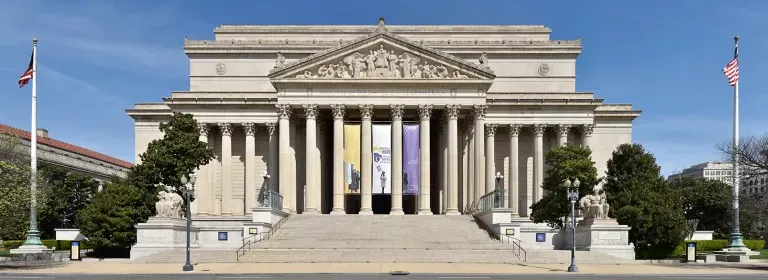 Photo: National Archives, via www.archives.gov
The town is Delmar, straddling the border between Maryland and Delaware. The year was 1856. And the request, while perfectly reasonable at the time, has become a testament to federal government's remarkable ability to simply ignore problems until they go away.
A Town Divided (Literally)
Delmar's problem was geography. When surveyors drew the Mason-Dixon line, they split the community right down the middle. Half the town woke up in Maryland, half in Delaware. Families found themselves living in different states depending on which side of the street they called home.
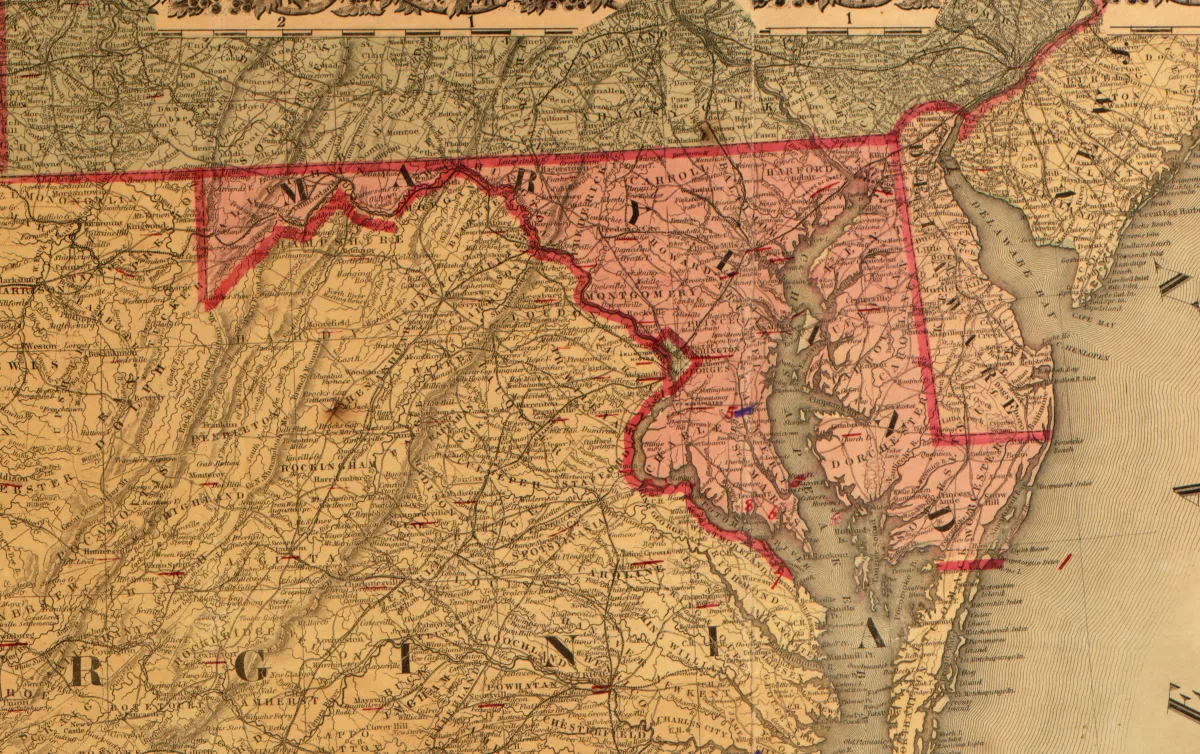 Photo: Mason-Dixon line, via philadelphiaencyclopedia.org
This might have been a charming quirk, but it created real hardships. Maryland residents had to travel over 50 miles to reach their county seat for legal business. Delaware residents could handle the same affairs just 12 miles away. Trade, taxation, and even mail delivery became unnecessarily complicated.
Worse, the two halves of town operated under different legal systems. Marriage licenses valid on one side of Main Street weren't recognized on the other. Business partnerships across the state line faced legal uncertainties. Even attending church could involve crossing state boundaries.
The Perfectly Reasonable Request
After years of bureaucratic frustration, the Maryland half of Delmar decided they'd had enough. Town leaders drafted a formal petition to Congress requesting that their portion of the community be transferred to Delaware.
Their arguments were compelling:
- Geographic isolation from Maryland's administrative centers
- Economic ties that naturally flowed toward Delaware
- Shared infrastructure that made artificial division impractical
- Family and social connections that ignored state boundaries
The petition was professionally written, properly notarized, and endorsed by local officials on both sides of the state line. Delaware's congressional delegation supported the transfer. Even Maryland's representatives agreed it made sense.
The Federal Filing System
In March 1856, Delmar's petition arrived in Washington with all the proper paperwork. Congressional clerks received it, logged it into the official record, assigned it a file number, and forwarded it to the appropriate committee for review.
Then something remarkable happened: absolutely nothing.
The committee received the petition and... filed it away. No hearings were scheduled. No votes were taken. No formal response was issued. The request simply disappeared into the vast machinery of federal bureaucracy.
The Waiting Game Begins
Delmar's residents assumed the delay was temporary. Federal government moved slowly, everyone knew that. Surely Congress would address their reasonable request during the next session.
Months passed. Then years.
Local officials wrote follow-up letters. They received polite acknowledgments confirming that their petition was "under review." But no action materialized.
The Civil War came and went. Reconstruction transformed the South. The Industrial Revolution reshaped American society. Through it all, Delmar's petition sat in its file, technically pending, officially ignored.
The Bureaucratic Black Hole
What happened to Delmar's request reveals something fascinating about how federal government actually works—or doesn't work. The petition wasn't rejected; that would have required someone to make a decision. It wasn't approved; that would have required legislative action. Instead, it entered a bureaucratic purgatory where requests go to die quietly.
Committee members changed. Staff turnover meant new clerks inherited files they didn't understand. The original context was forgotten, but the paperwork remained, shuffled from office to office like a bureaucratic ghost.
By the 1880s, even Delmar had largely given up hope.
Life Goes On (Sort Of)
Without federal resolution, Delmar developed its own creative solutions. The two halves of town began operating with informal cooperation agreements. They shared services where possible, ignored state boundaries where practical, and generally got on with life.
Local businesses learned to navigate dual tax systems. Families adapted to cross-border regulations. The post office established separate ZIP codes but coordinated delivery routes. Over time, the divided town developed a unique culture of pragmatic federalism.
But the legal complications never fully disappeared. Property transfers across the state line remained complex. Legal disputes could involve multiple jurisdictions. Emergency services had to coordinate across state boundaries.
The Rediscovery
In 1976, during America's bicentennial celebration, a local historian researching Delmar's past stumbled across references to the original petition. Curious, he contacted federal archives to see if any record survived.
Not only did the petition still exist—it was still technically active.
Archivists confirmed that Congress had never formally acted on Delmar's request. The file remained open, the petition officially pending, waiting for congressional action that was already 120 years overdue.
The Media Circus
News of the forgotten petition created a brief media sensation. Reporters descended on Delmar to interview residents about living in bureaucratic limbo. Late-night talk shows joked about federal efficiency. Political cartoonists had a field day.
Several congressmen promised to "finally resolve" Delmar's request. Committee hearings were scheduled. Staff members dusted off the original petition and prepared briefing materials.
Then, once again, nothing happened.
The Persistence of Inaction
Today, nearly 170 years after it was submitted, Delmar's petition remains technically pending in federal records. The town has long since adapted to its divided existence. Modern residents barely think about which state they live in for daily purposes.
But the original legal complications persist. Cross-border property transactions still require extra paperwork. Emergency services maintain separate response protocols. The artificial division continues to create minor but real inconveniences.
The Lesson in Limbo
Delmar's story illustrates a peculiar feature of American democracy: sometimes the most effective government response is no response at all. By doing nothing, Congress avoided making a difficult decision while allowing local communities to develop their own solutions.
The town that asked to switch states has become a living experiment in flexible federalism. Residents have learned to navigate multiple jurisdictions, creating informal cooperation that might be more effective than formal consolidation.
The Request That Refuses to Die
Every few years, someone rediscovers Delmar's petition and asks why Congress hasn't acted. The answer is both simple and complicated: because nobody has forced them to.
The petition sits in its file, a monument to bureaucratic inertia and democratic patience. It's a reminder that sometimes the most extraordinary thing government can do is nothing at all—and that citizens are often more adaptable than the institutions designed to serve them.
Delmar asked to join a different state 150 years ago. They're still waiting for an answer, but they've stopped holding their breath.