The Agent Who Studied So Hard He Forgot He Was Pretending
The Cover Story That Got Too Real
In the shadowy world of Cold War espionage, agents were trained to blend into their surroundings so completely that their true identities became invisible. But what happens when someone becomes so good at pretending to be something that they actually become it? One American intelligence operative discovered the answer to this question in the most unexpected way possible: by accidentally earning genuine expertise in a field he was only supposed to fake understanding.
His cover story was so convincing that it convinced him too.
The Perfect Academic Disguise
In the early 1960s, a CIA operative we'll call Dr. Martin Hayes received an assignment that seemed straightforward enough. He would pose as a marine biology researcher, using academic conferences and research exchanges as cover for intelligence gathering in Eastern Europe and the Soviet Union. The field was perfect for espionage work—obscure enough that few people could challenge his credentials, but international enough to justify extensive travel.
 Photo: Eastern Europe, via m.media-amazon.com
 Photo: Soviet Union, via www.wildeman-zundapp.nl
The Agency provided Hayes with a meticulously crafted background: a doctorate from a respectable university, a handful of published papers ghost-written by actual scientists, and a research specialty in Arctic marine ecosystems. On paper, he was a legitimate scholar with impressive credentials and a promising career ahead of him.
The only problem was that Hayes knew almost nothing about marine biology beyond what he'd crammed in a six-week crash course.
When Method Acting Goes Too Far
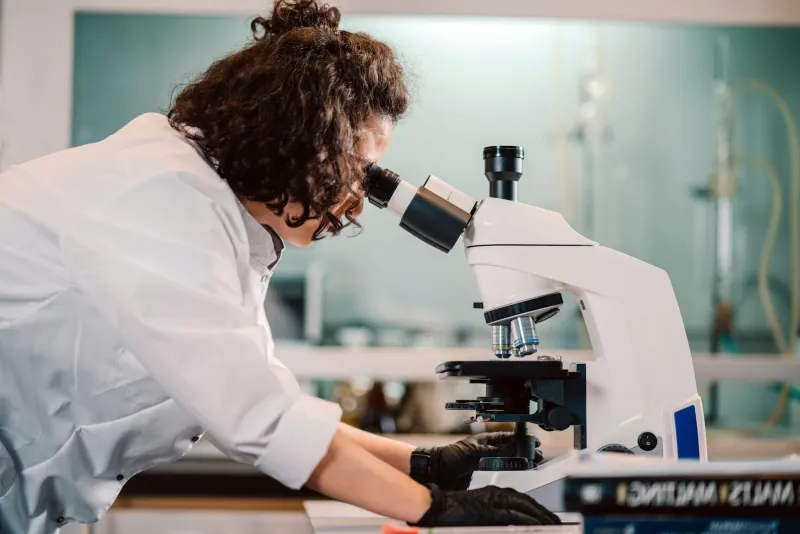
Hayes threw himself into his role with the dedication that made him valuable as an operative. He attended conferences, networked with real researchers, and maintained correspondence with colleagues around the world. But somewhere in his second year of deep cover, something unexpected began happening: he started actually caring about marine biology.
What began as dutiful memorization of facts and terminology evolved into genuine curiosity about Arctic ecosystems. Hayes found himself reading scientific journals not just to maintain his cover, but because he was genuinely interested in the latest research on cold-water fish populations and ice formation patterns.
By his third year, he was conducting actual field research during his supposed intelligence missions, collecting water samples and documenting species distributions with the enthusiasm of a real scientist.
The Accidental Scholar
As Hayes's missions took him to remote Arctic research stations and international conferences, his knowledge deepened beyond what any crash course could have provided. He began noticing gaps in existing research, developing theories about marine ecosystem relationships, and even disagreeing with established experts based on his own observations.
In 1967, something remarkable happened: Hayes published a legitimate research paper. Not a cover story fabrication, but actual scientific work based on data he'd collected during his travels. The paper, on temperature variations in Arctic coastal waters, was peer-reviewed and accepted by a respected marine biology journal.
His CIA handlers were initially concerned—the publication drew more attention to their operative than they preferred. But the paper's reception in the scientific community was so positive that it actually strengthened Hayes's cover identity beyond anything the Agency could have manufactured.
The Identity Crisis
By the early 1970s, Hayes faced a problem no spy training had prepared him for: he had become one of the world's leading experts on Arctic marine ecosystems. His research was being cited by other scientists, universities were trying to recruit him, and he was invited to serve on international research committees.
Meanwhile, his intelligence work had become almost secondary. He was still gathering information and filing reports, but his real passion had shifted to understanding how climate changes were affecting polar marine life—research that had nothing to do with national security.
When the Agency finally decided to extract Hayes from his long-term cover assignment in 1974, they discovered they had created an unprecedented situation: their operative had accidentally become more valuable as a scientist than as a spy.
The Professor Who Used to Be a Spy
After his extraction, Hayes faced the strangest career transition in intelligence history. He had spent over a decade pretending to be a marine biologist, but somewhere along the way, the pretense had become reality. His published research was legitimate, his expertise was genuine, and his reputation in the scientific community was solid.
The CIA offered him other assignments, but Hayes had lost his taste for espionage work. Instead, he leveraged his accidentally-earned credentials into a position at a major university, where he continued the research he'd begun as a cover story.
His colleagues never suspected that their distinguished professor of marine biology had spent the 1960s and early 1970s as a Cold War operative. To them, he was simply a brilliant researcher who'd done fascinating fieldwork in some of the world's most remote locations.
The Legacy of Accidental Expertise
Hayes went on to have a distinguished academic career, publishing dozens of papers and mentoring graduate students for over two decades. His early work on Arctic marine ecosystems proved prescient as climate change made polar research increasingly important.
In retirement, he occasionally reflected on the strange path that had led him from intelligence operative to respected scientist. His cover story had been so thoroughly constructed that it had reconstructed him in the process.
When Fiction Becomes Fact
The Hayes case became something of a legend within intelligence circles—a cautionary tale about the dangers of deep cover assignments that go too deep. But it also represented something remarkable: proof that expertise can emerge from the most unlikely circumstances, and that sometimes the best way to become something is to start by pretending to be it.
In the world of espionage, agents are trained to become anyone except themselves. Hayes had followed those instructions so well that he'd accidentally discovered who he really was: not a spy who pretended to be a scientist, but a scientist who had briefly worked as a spy.
It's a reminder that identity is more fluid than we often assume, and that sometimes the roles we play end up playing us back.