The Most-Sung Song in America Was Owned by a Corporation — Until a Judge Read the Fine Print
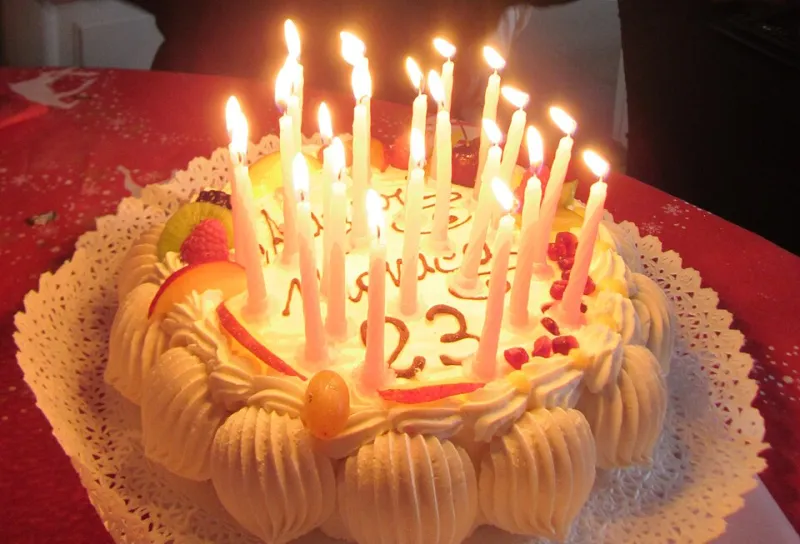
Photo: Francesca Cesa Bianchi, Milano, CC BY-SA 3.0 it, via Wikimedia Commons
The Two Most Expensive Words in Show Business
For decades, film directors, TV producers, and restaurant chains shared a quiet understanding: if you wanted characters on screen to sing "Happy Birthday to You," you were going to pay for it. The song belonged to a music publishing company. The royalties were real. The licensing fees were not optional.
This arrangement generated an estimated $2 million per year at its peak. It meant that countless productions either paid up, worked around the song, or replaced it with a legally safer alternative. It's why, if you've ever noticed characters in movies singing a slightly different birthday song that sounds suspiciously cheerful and generic, you now know why.
The whole thing turned out to be built on documentation that, under examination, was almost certainly not what it claimed to be.
Where the Song Actually Came From
The melody that would become "Happy Birthday to You" has a genuinely traceable origin, which is part of what makes the copyright story so remarkable. In 1893, two sisters from Kentucky — Mildred and Patty Hill — published a song called "Good Morning to All" in a collection of classroom songs for young children. The tune was simple, singable, and designed to be easy for small kids to learn.
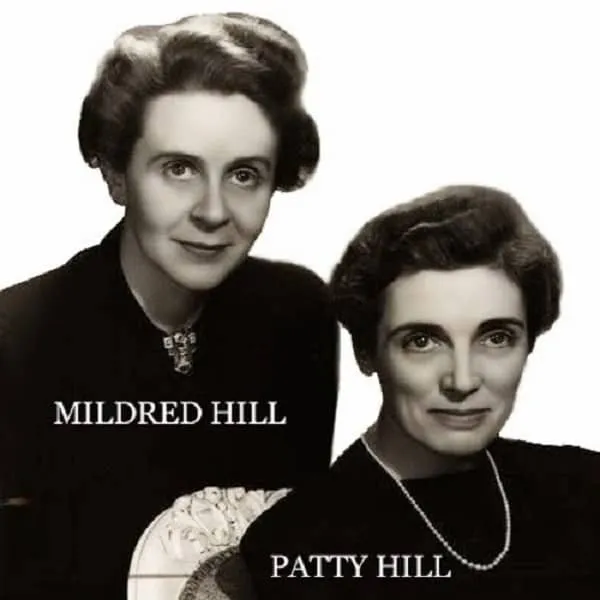 Photo: Mildred and Patty Hill, via www.skoove.com
At some point in the following decades — the exact moment is disputed — someone began singing different words to that melody. "Happy Birthday to You" emerged as a popular variation, spreading through schools, homes, and social gatherings through the kind of organic folk transmission that was common before mass media. By the early twentieth century, it was everywhere.
In 1935, a company called Summy Co. registered a copyright on a specific piano arrangement of the song, with the birthday lyrics. This is where things get complicated.
The Copyright That Kept Growing
Summy Co. eventually became part of a larger music publishing entity, and the copyright on "Happy Birthday to You" was treated as a legitimate, enforceable asset. Companies paid licensing fees to use it. The fees were collected. Lawyers sent letters when people used the song without permission. The whole apparatus functioned as if the ownership were unambiguous.
For most of the twentieth century, almost nobody challenged this. The fees were annoying but manageable for large productions, and the legal cost of fighting a copyright claim typically exceeded whatever the licensing fee would have been. The path of least resistance was to pay.
Then a documentary filmmaker named Jennifer Nelson decided she wasn't going to.
 Photo: Jennifer Nelson, via osba.org
The Filmmaker Who Pulled the Thread
Nelson was making a documentary about the history of "Happy Birthday to You" — which meant she needed to license the song, which meant she was quoted a licensing fee that struck her as absurd given the circumstances. She paid it, then sued to get the money back, arguing the copyright was invalid.
What her legal team found in the archives was, to put it gently, a problem for the company claiming ownership.
The 1935 copyright registration covered a specific piano arrangement. But the claim to own the lyrics — the "Happy Birthday to You" words themselves — rested on documentation that, upon examination, didn't actually support what it was supposed to prove. The chain of title connecting the Hill sisters' original 1893 publication to the company currently collecting royalties was, at best, murky. At worst, it was a legal fiction that had been treated as fact for so long that everyone had simply stopped questioning it.
In 2015, a federal judge ruled that the company — by then Warner/Chappell Music — had never actually owned the rights to the lyrics in the first place. The 1935 copyright covered the arrangement, not the words. The birthday lyrics, the judge found, were effectively in the public domain.
Eighty Years of Royalties on a Song Nobody Actually Owned
Let that settle for a moment. For roughly eighty years, a music company collected licensing fees on a copyright claim that a federal court ultimately found to be unsupported by the actual historical record. Productions paid. Restaurants paid. Film studios paid. All of it based on documentation that didn't hold up when someone finally looked at it carefully.
Warner/Chappell eventually settled the resulting class-action lawsuit for $14 million, agreeing to compensate parties who had paid licensing fees based on the invalid claim. It was, by any measure, an extraordinary outcome — not just legally, but as a story about how institutional momentum can sustain a claim long past the point where it deserves sustaining.
Nobody had bothered to seriously examine the copyright because the cost of examining it exceeded the cost of compliance. The company had no incentive to invite scrutiny. The system reinforced itself until one filmmaker decided the principle was worth fighting over.
The Song Is Free Now
Since the 2016 settlement — which followed the 2015 ruling and included a formal relinquishment of the copyright claim — "Happy Birthday to You" has been unambiguously in the public domain. Film productions can use it without licensing fees. Restaurants can have their staff sing it without legal exposure. It can appear in any context, at any volume, for any purpose, without anyone writing a check to a music publisher.
This is, when you think about it, the appropriate legal status for a song that has been sung by essentially every American alive, at events ranging from children's parties to presidential inaugurations, in virtually every language on earth.
The melody that two Kentucky sisters wrote for a classroom singalong in 1893 is now, finally and officially, everyone's.
It just took eighty years of royalties and a documentary filmmaker with a very specific grievance to get there.