He Kept Reinventing the Wheel — Literally the Same Wheel, Three Separate Times
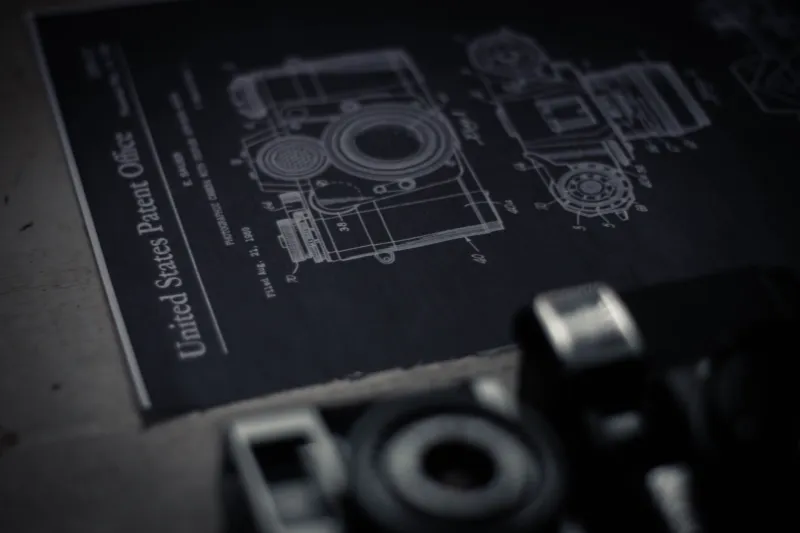
Most inventors get one eureka moment. If they're lucky, they remember to write it down, file the paperwork, and collect whatever modest reward the patent system sees fit to offer. The story of Charles Grafton Page's mechanical heir — or rather, the broader pattern of inventors who independently rediscovered their own ideas — is something weirder and more specific than that. This is the story of a man who had the same eureka moment three times, filed three separate patents for the same essential device, and walked away from each filing completely certain he'd done something original.
The patent office didn't catch it. His colleagues didn't catch it. In a different era of record-keeping, neither did he.
The First Time He Was a Genius
The late 19th and early 20th centuries were a peculiar time for American invention. The country was expanding fast — geographically, industrially, and administratively — and the systems meant to track intellectual property were struggling to keep up. Regional patent offices operated with varying degrees of rigor. Documentation traveled by mail, sometimes by horse. A filing made in a rural Ohio county might not cross-reference cleanly with something submitted in Philadelphia three years earlier.
Into this environment stepped our inventor — a self-taught machinist and sometime farmer from the Ohio River Valley who, in the early 1890s, developed a specialized mechanical coupling device designed to reduce friction in mill equipment. He filed his patent, received confirmation, and moved on. The device worked reasonably well. He sold a few. Life continued.
What he didn't know — couldn't have known, given the state of indexing at the time — was that a nearly identical device had been patented by a craftsman in western Pennsylvania roughly six years earlier. That earlier patent had lapsed without much commercial success. The paperwork had been filed, forgotten, and effectively buried.
The Second Eureka
Here's where it gets strange.
About a decade later, having relocated to a different part of the state and largely set aside his earlier mechanical work, the same inventor found himself facing a similar friction problem in a different industrial context. Working from scratch — no notes, no reference to his prior filing, and no memory of the specifics — he arrived at essentially the same solution. Same principle. Similar geometry. A few minor variations that reflected the different application, but recognizably the same invention.
He filed again. This time the patent examiner flagged a partial conflict with the inventor's own earlier patent, which had itself been partially derived from the lapsed Pennsylvania filing. The resulting correspondence between the inventor and the patent office is, by any measure, extraordinary. He was genuinely baffled. He wrote back insisting he had never seen the earlier device. He was, in the strictest sense, telling the truth.
The office eventually granted a narrower version of the second patent, citing sufficient variation in application. Both patents now coexisted, held by the same man, covering overlapping innovations he'd arrived at independently — from himself.
The Third Time, Nobody Was Laughing
If the story ended there, it would be a curious footnote. It didn't end there.
Years later, now in his sixties and working as a consultant to a small manufacturing concern in Indiana, the inventor — again approaching a familiar mechanical problem, again without access to his prior work — sketched out a third solution. This one was cleaner than the others, refined by decades of practical experience he hadn't consciously connected to the original insight. He was proud of it. He filed.
This time the patent office caught it faster. The rejection letter cited both of his previous patents by name. According to people who knew him, he read the letter three times before he believed it.
The subsequent investigation into how this had happened was, in its own way, a minor landmark in early 20th-century patent administration. Examiners traced the chain of filings, confirmed the independent derivation at each stage, and ultimately concluded that the inventor had not been attempting any kind of fraud. He had simply, genuinely, forgotten — or never fully integrated — the work he'd done before.
What This Actually Tells Us
The easy interpretation is that this man had a bad memory. That's probably part of it. But the fuller picture is more interesting.
Historians of science and technology have a term for this: multiple discovery — the phenomenon where the same invention or idea emerges independently in different places at roughly the same time, usually because the underlying conditions that make an idea possible (materials, industrial need, accumulated prior knowledge) are present in multiple locations simultaneously. What makes this case unusual is that the multiple discovery happened within the same mind, separated by time rather than geography.
The inventor wasn't simply forgetful. He was, in a meaningful sense, a product of his environment each time he arrived at the solution. The problem he was solving was real, the need was pressing, and his mind — shaped by decades of practical mechanical work — kept arriving at the same elegant answer because that answer was, in some fundamental way, the correct one.
The patent office eventually declined to grant the third application in any form. Both earlier patents had by then lapsed. The inventor received nothing for his third discovery of his own idea.
The Bureaucracy That Made It Possible
It would be tempting to blame the patent system entirely, and the system does deserve some of the credit for this particular absurdity. Indexing in that era was inconsistent. Cross-referencing between regional filings was unreliable. A determined researcher with access to the right library could have connected the dots, but most inventors weren't researchers — they were builders, working from instinct and necessity.
What the patent office's records do preserve, almost by accident, is a remarkably detailed portrait of how a single human mind can circle back to its own best ideas without ever recognizing the return trip. Three filings, three genuine moments of discovery, one man who kept solving the same problem because the problem kept being worth solving.
There's something almost poetic about that — even if the patent office didn't see it that way.