The Station That Wasn't Supposed to Exist Anymore — But Somehow Became the Busiest Stop in Town
Cities make plans. Plans get filed. Files get buried. And sometimes, in the gap between intention and follow-through, something genuinely strange takes root.
This is the story of a train station that was supposed to be rubble by 1974 and instead became — through a sequence of bureaucratic mishaps so improbable they barely seem real — one of the most-used commuter stops in its region. Nobody built it up. Nobody invested in it. Nobody even officially knew it was operating. It just... kept going.
The Plan That Made Perfect Sense at the Time
In the early 1970s, rail infrastructure across the American Midwest was being reorganized at a scale that hadn't been seen since the original boom of the previous century — only this time, the goal was contraction, not expansion. Passenger numbers had cratered. Cars were ascendant. Federal and state planners were drawing lines through station names on maps with the calm efficiency of people who believed they were solving a problem.
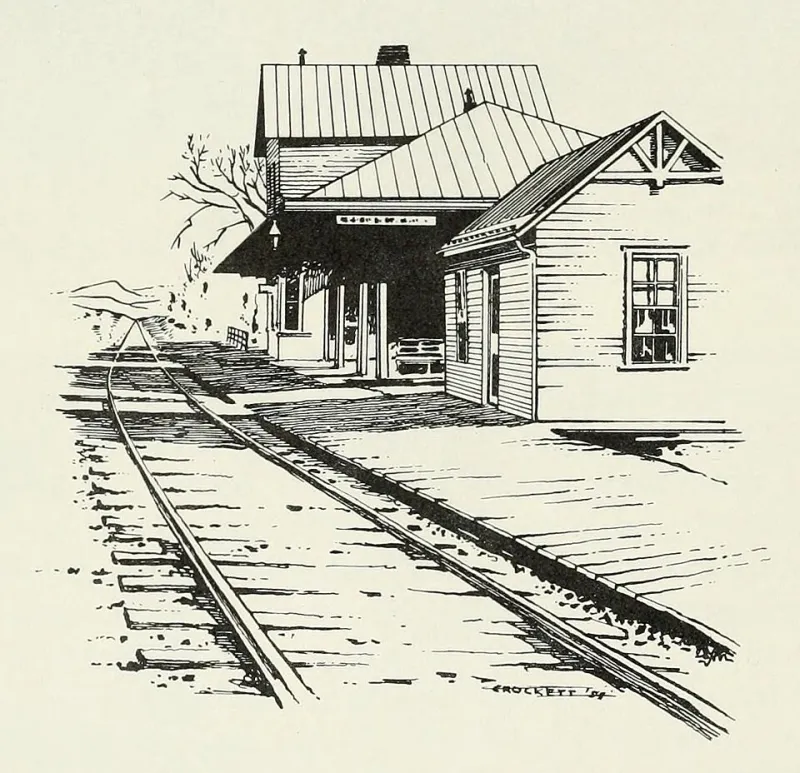
A mid-sized station in an industrial corridor outside a larger city was one of those lines. It had been built in the 1910s to serve factory workers and had operated continuously since then, but by the early seventies, ridership had thinned considerably. The platform was aging. The building needed significant structural work. The regional transit authority, working through a list of facilities to be decommissioned, scheduled it for demolition in the spring of 1973.
The order was issued. The contractor was hired. The date was set.
Then someone wrote the wrong station name on the work order.
The Scheduling Error Heard by Nobody
The details of exactly how the mix-up occurred have never been fully reconstructed, partly because the relevant paperwork was itself lost in a subsequent records consolidation. What is known is that the demolition crew showed up at the wrong location — a smaller, already-vacant switching facility several miles away — and knocked that building down instead.
By the time anyone noticed the discrepancy, the transit authority had moved on to other projects. The station was still standing. The contractor had been paid. The line item was closed in the budget. Nobody filed a correction because nobody, in the immediate aftermath, realized a correction was needed.
The station was not formally reopened. It was simply not demolished. Trains continued to stop there — because no one had issued a directive to remove it from the schedule. A single transit employee, a man who had worked that corridor for fifteen years, continued to show up and manage the platform each morning. He later told a reporter he assumed someone would tell him when to stop.
No one did.
Three Decades of Unofficial Operation
What followed is the part of the story that strains credulity even when you know it's true.
Over the next thirty years, the station didn't wither. It grew.
The industrial corridor around it shifted. New residential developments went up in the surrounding neighborhoods. Workers who needed to get into the city discovered that the station was there, that trains stopped at it, and that — unlike the newer facilities — it was close, uncrowded, and free of the aggressive ticketing enforcement found elsewhere on the line. Word spread the way word spreads in neighborhoods: slowly, then all at once.
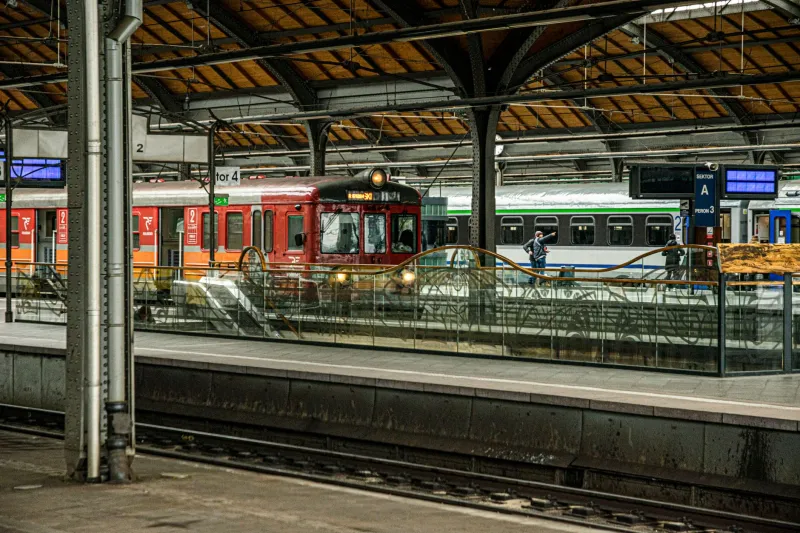
By the mid-1990s, the platform was handling a genuine daily crowd. By the early 2000s, estimates would later suggest, somewhere between two and four thousand people were using it on a regular basis. There was no formal ticketing booth — riders purchased passes elsewhere and simply boarded. There was no official staff — the original employee had retired in the late 1980s, and a small group of informal volunteers had, without any authorization whatsoever, begun managing the platform themselves.
It was, by any reasonable definition, functioning public transit infrastructure. It was also, by any reasonable legal definition, completely unauthorized.
The Day the City Caught Up
The unraveling began in 2003, when a regional transit planning committee commissioned a ridership study to identify overcrowding at existing stations. The consultants doing the fieldwork noticed, in their data, a statistically anomalous number of passengers appearing on trains that passed through a stop that did not appear in the official station registry.
They flagged it. An investigator went out to look.
What she found was a functioning commuter hub: a crowd of morning riders, an informal schedule posted on a handwritten sign, a coffee cart operated by a local vendor who had been paying rent to nobody for eleven years, and a building that, despite not having been officially maintained, had been kept in reasonable shape by the community that used it.
The transit authority's response was, by bureaucratic standards, remarkably pragmatic. Rather than shut the station down, they quietly began the process of formally reinstating it. It was cheaper than building a new facility in that corridor, which several planning documents had been recommending for years. The infrastructure was already there. The riders were already there.
Formal reinstatement came in 2005. The station received a new designation, a proper ticketing system, and its first official staff in decades.
At the ribbon-cutting ceremony, a transit official called it a model of community-driven infrastructure.
No one mentioned the demolition order from 1973. Some things are better left in the filing cabinet where they belong.