Four Hundred People Started Dancing in July 1518. The City Prescribed More Dancing.
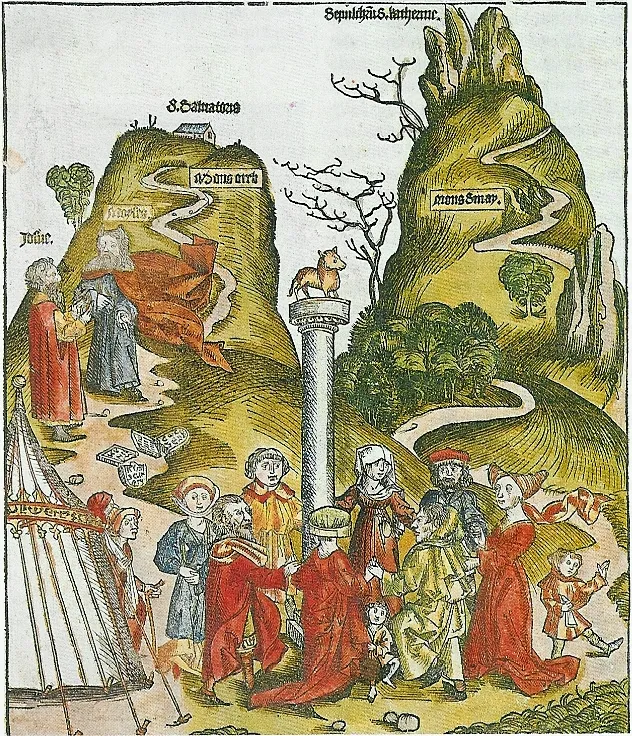
Photo: Unknown, Public domain, via Wikimedia Commons
Medical history is full of mysteries, but most of them involve missing evidence. The dancing plague of 1518 has the opposite problem: it's one of the most documented strange events of the entire medieval era, described by physicians, city council records, and chroniclers who all agree on the basics. Hundreds of people in Strasbourg danced, compulsively, for weeks. Some of them died doing it.
And the city's leading medical advice? Encourage it. Give the dancers music. Clear a hall. Let them dance it out of their systems.
It worked about as well as you'd expect.
It Started With One Woman
On a hot July day in 1518, a wife named Frau Troffea stepped into the street outside her home in Strasbourg — then a free imperial city in the Holy Roman Empire, today a charming French town known for gingerbread and half-timbered houses — and began to dance.
There was no music. No festival. No reason anyone recorded. She just danced, swaying and stepping, and at some point it became clear she wasn't stopping. Sources say she danced through the day and into the night, and then again the next day, sweat-soaked and pleading for help while her feet kept moving.
Within a week, roughly three dozen others had joined her. Within a month, chroniclers put the number around 400. People danced in the streets, in their homes, in the market square. Their shoes filled with blood. Some collapsed from exhaustion, strokes, or heart failure — accounts from the period claim as many as fifteen a day at the height of it.
The Diagnosis: Too Much Hot Blood
To understand the response, you have to understand what the city believed was happening. The leading theory of the day was that these poor souls were afflicted with "hot blood" — a bodily imbalance that could only be cured by sweating the affliction out. The prescription, therefore, was not rest. It was more dancing, ideally in dedicated spaces where the afflicted could properly purge themselves.
The city council went further. They opened the guildhall and the horse market for the dancers. They hired musicians. They even built a stage.
If you're wincing, you've spotted the problem: they essentially turned a psychological contagion into a public event with a soundtrack. The crisis got worse before it got better. Eventually, the authorities pivoted to the opposite extreme — carting the dancers off by wagon to a shrine of Saint Vitus, the patron saint of dancing, in the hills above the town. There, victims were blessed, given little crosses and shoes, and reportedly released from the compulsion.
The outbreak faded by autumn. Nobody in Strasbourg danced themselves to death again. Nobody has ever explained exactly why any of it happened.
The Theories, Ranked From Plausible to Weird
Modern science has taken several swings at this one, and none has landed a knockout.
Ergot poisoning. The fungus that grows on rye and produces LSD-like compounds was long a popular culprit. The problem: ergot outbreaks typically come with violent convulsions and gangrene, not days of rhythmic movement, and ergot doesn't explain why the afflicted danced together, in a coordinated social phenomenon, rather than hallucinating individually.
Mass psychogenic illness. This is the leading theory today, and it's more interesting than it sounds. Strasbourg in 1518 was a pressure cooker — famine, disease, and a wave of religious dread, including a belief that a saint was cursing sinners with a dancing plague. Historian John Waller, who wrote a book on the outbreak, argues that extreme collective stress can manifest physically when people share beliefs about what that stress looks like. In a culture steeped in tales of cursed saints, dancing until you dropped was, in a sense, a script people were primed to follow.
A cult. Some historians suspect the whole thing was a heretical sect dancing in ecstatic ritual, dressed up by terrified chroniclers as an illness. It would explain the coordination — but not the deaths.
And 1518 wasn't even alone. Medieval Europe logged repeated dancing manias, going back to a 1374 outbreak that spread across multiple cities. Whatever was happening, it was apparently contagious across decades.
The Uncomfortable Part
What makes the 1518 plague stick in the mind isn't just the strangeness. It's that the most documented, most credible explanation — mass psychogenic illness — means the plague was, in some sense, real and not real at the same time. The exhaustion was real. The deaths were likely real. The suffering was real. But the compulsion itself lived entirely in the mind, spread by belief, and was fed by the very authorities who thought they were treating it.
The city prescribed more dancing. The dancers obliged. Five hundred years later, we still don't have a better answer than that.