Your Car Rolls Uphill Here. Physicists Have Checked. It Still Does.
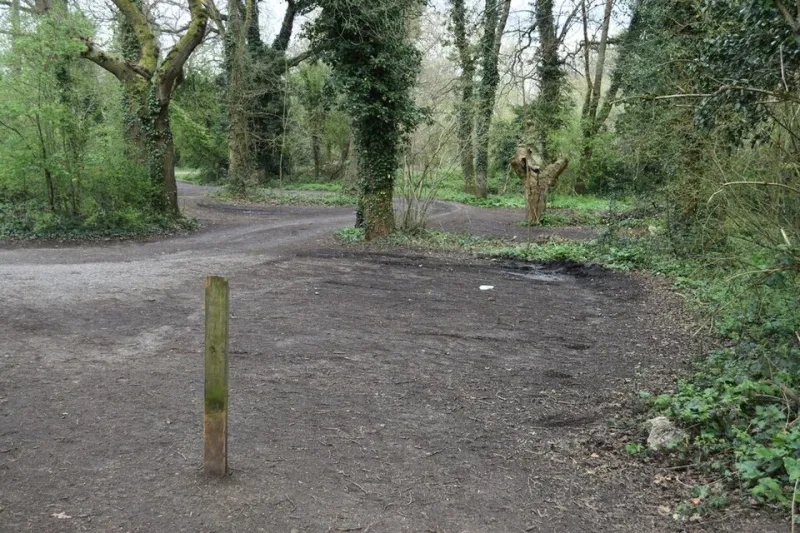
Photo: David Martin , CC BY-SA 2.0, via Wikimedia Commons
Pull your car up to the white line painted on a rural road outside Sylacauga, Alabama. Put it in neutral. Release the brake. Wait.
Your car will roll forward — which is to say, it will roll toward what your eyes are absolutely certain is the top of a hill.
This is Gravity Hill. There are roughly 30 documented versions of it across the United States, with clusters in Pennsylvania, California, New Jersey, and the rural South. They have local names. They have origin legends. A few of them charge nothing and still draw thousands of visitors a year, people who drive out to a stretch of unremarkable road to watch their vehicle do something that their brain insists is impossible.
Physicists have studied these places. They've brought surveying equipment, GPS instruments, and levels. They know exactly what's happening.
Knowing hasn't made it any less disorienting.
The Spot That Started the Obsession
One of the most-visited gravity hills in the country sits near Gettysburg, Pennsylvania, on a road called Gravity Hill Road — which, credit where it's due, is at least honest about what you're getting into.
Visitors have been pulling off to test the phenomenon there since at least the 1950s. The local legend, as with many gravity hills, involves ghosts: specifically, the spirits of Civil War soldiers who push stalled vehicles to safety. It's a good story. It's also completely unnecessary to explain what's actually happening, which is in some ways even stranger.
Pour baby powder on your car hood before you park it. When the car rolls, you'll see small handprints appear in the powder. This is a trick that's been circulating on road trip blogs for years. The handprints are, of course, whatever was already on the car. But the fact that people feel compelled to invent additional layers of weirdness on top of an already-weird phenomenon says something about how badly the human brain wants a story.
What the Instruments Say
When researchers from various universities have brought proper surveying equipment to gravity hills, they consistently find the same thing: the road is not going uphill. It's going downhill. Gently, typically — a slope of just a few degrees — but unmistakably downhill.
The visual illusion is created by the surrounding landscape. At a properly configured gravity hill, the terrain around the road slopes in a way that tricks your visual system into establishing the wrong horizon line. Your brain determines "up" and "down" partly by comparing the road to nearby reference points — tree lines, fence rows, the angle of adjacent hills. When those reference points are themselves tilted relative to true horizontal, your internal level goes wrong.
You see the road going up. The road is going down. Your car rolls in the direction gravity actually points, which looks, to your very confident and very mistaken eyes, like uphill.
This is a well-documented perceptual phenomenon. It has a name — the "gravity hill illusion" — and the mechanics are reasonably well understood.
And yet.
And Yet
Knowing the explanation doesn't break the illusion. That's the part that researchers find genuinely interesting and tourists find genuinely maddening.
You can stand at a gravity hill, fully aware that the road slopes downward, armed with GPS data confirming the elevation change, and watch your car roll — and it will still look like it's going uphill. Your brain will not update. It will keep insisting, with complete confidence, that something impossible is happening.
This is what makes gravity hills worth studying beyond the novelty. They're not just roadside attractions. They're demonstrations of how thoroughly your visual system can override what you intellectually know to be true. Researchers in perceptual psychology use them as case studies in how the brain constructs reality rather than simply recording it.
You are not seeing the world. You are seeing your brain's best guess about the world, assembled from incomplete information. Usually the guess is good. At Gravity Hill Road outside Gettysburg, the guess is spectacularly, stubbornly wrong.
The Economy of Impossible Roads
Here's where the story takes a turn that feels very American.
Some of these hills have become small industries. The gravity hill near New Paris, Pennsylvania has a dedicated parking area. There are gravity hill tour guides. There is gravity hill merchandise. One location in California added a small admission fee — not to access any facility, but simply to park near the spot — and found that people paid it without complaint, because apparently the experience of watching your car roll uphill is worth $5.
A few locations have been so thoroughly adopted by local identity that the towns have resisted any official signage explaining the illusion. Why would you want to spoil it? The confusion is the product.
What's stranger still is that the sites don't need promotion. They spread by word of mouth, by viral phone videos, by road trip blogs and Reddit threads. Someone films their car rolling toward what looks like the crest of a hill, posts it with a caption like "there is no explanation for this," and a hundred thousand people watch it and feel the same low-grade unease.
There is an explanation. The explanation is that your brain is confidently wrong.
Somehow that's less reassuring than ghosts.