The Fire Started in 1962. The Last Resident Got Eviction Papers in 2009.
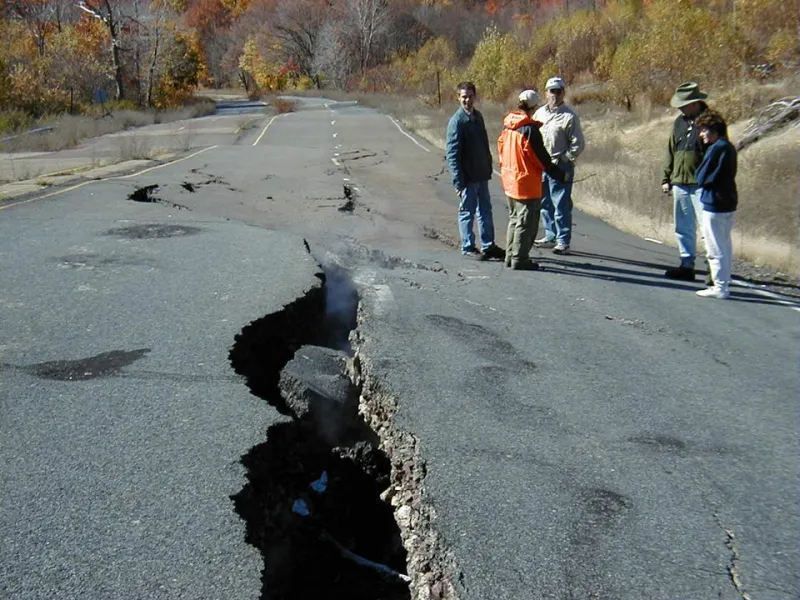
Photo: James St. John, CC BY 2.0, via Wikimedia Commons
There's a town in Pennsylvania where the ground has been on fire longer than most Americans have been alive. Not figuratively. The dirt itself is burning, somewhere down in the old mine tunnels beneath the streets, and it has been since 1962.
If that sounds like the setup to a horror movie, that's because it basically is — the foggy, abandoned streets of Centralia inspired the creepy town in the Silent Hill franchise. But Centralia isn't fiction. It's a real borough in Columbia County, and for a while, its residents treated a smoking hillside the way you'd treat a neighbor's leaf fire: as a nuisance, not a catastrophe.
How a Town Catches Fire From the Inside
Centralia was a coal town, the way a lot of Pennsylvania towns were. Anthracite ran the economy, and the mines ran beneath the borough itself. In May 1962, workers were clearing a landfill on the edge of town and did what small towns often did back then: they burned the trash. The problem was the landfill sat in an abandoned strip-mine pit, and the pit connected to the labyrinth of old tunnels below.
The fire found the coal seam and settled in.
Coal seam fires are nearly impossible to extinguish once they take hold. There's no flame to douse — just a slow, subterranean smolder consuming fuel across square miles, breathing through cracks in the earth. Firefighters tried. Engineers tried. Estimates to properly seal it ran into the millions, an astronomical sum for a town of barely a thousand people, and the government decided the fire would probably just burn itself out.
It did not burn itself out.
The Decades When Smoke Was Just Weather
Here's the part that sounds made up: for roughly twenty years, Centralia mostly carried on. Kids went to school. Families held picnics. Steam rose from odd patches of ground, and some backyards stayed suspiciously snow-free in January, and everyone more or less shrugged.
The complacency is easier to understand than it sounds. The fire moved slowly — glacially by human standards. There was no single terrifying day. There was just the occasional whiff of sulfur, a dying patch of vegetation, a road that stayed warm.
Then the ground started winning arguments.
In 1979, a gas-station owner named John Catherines stuck a temperature gauge into one of his underground tanks and found it reading uncomfortably close to the ignition point of gasoline. In 1981, twelve-year-old Todd Domboski was playing in his grandmother's backyard when the earth suddenly opened beneath him. He grabbed a tree root as the ground swallowed him up to his waist. The steaming pit below was heavy with carbon monoxide. His cousin pulled him out. The hole was estimated to be dozens of feet deep.
A boy nearly vanished into the earth in his own backyard, and still, not everyone left.
The Buyout Nobody Wanted to Be First For
By the early 1980s, the federal government had seen enough. Congress allocated $42 million for relocation, and Pennsylvania began buying out Centralia's homes, one by one. Most residents took the deal. A town that had survived mine accidents, economic collapse, and everything else the twentieth century threw at it finally lost to something nobody could see, fight, or negotiate with.
By the 1990s, the map of Centralia was mostly empty space where streets used to be. The state condemned the remaining properties. The zip code was discontinued in 2002 — you can't mail a letter to Centralia anymore.
And yet a handful of residents stayed. Their position was, in its way, unimpeachable: the fire was underground, their houses were above ground, and they'd spent decades breathing the same air as everyone who'd moved away without dropping dead. Why should they be exiled from their own homes?
They fought the condemnations through the courts for years. In 2013, they finally reached a settlement: the state would let the remaining residents — by then just a few people — live out their lives in their houses. When they die, the town dies with them.
A Fire With No Finish Line
Geologists estimate the coal beneath Centralia could burn for another 250 years. The fire has already spread beneath the neighboring village of Byrnesville, which was also evacuated and wiped off the map. Graffiti Highway — a stretch of abandoned Route 61 that cracked and steamed and became a pilgrimage site for urban explorers — was covered with dirt in 2020 to keep the crowds away.
What's left is a grid of roads leading nowhere, a cemetery on a hill, and a handful of elderly holdouts living legally in a town that officially doesn't exist. Somewhere below their basements, a fire that started when Lyndon Johnson was president keeps its slow appointment with the next two and a half centuries.
Nobody fixed it. Eventually, nobody could. And a few people decided that if the ground was going to burn, they'd just as soon watch it from their own porch.