The Map That Changed Everything
Somewhere in a windowless government office in 1962, a surveyor made the kind of mistake that usually results in minor paperwork corrections. Instead, it accidentally created one of America's most pristine wilderness preserves.
The Clearwater Basin in northern Idaho was supposed to remain privately owned logging territory. A single misplaced decimal point on a federal survey map changed that forever, turning 50,000 acres of forest into protected federal land without anyone realizing it for nearly a decade.
When Precision Meets Human Error
The mistake happened during the massive federal land resurvey project of the 1960s, when the U.S. Geological Survey was updating Depression-era maps using new aerial photography and satellite technology. Surveyor James Kellerman was tasked with mapping property boundaries in the remote Clearwater region, where private timber companies owned vast tracts of old-growth forest.
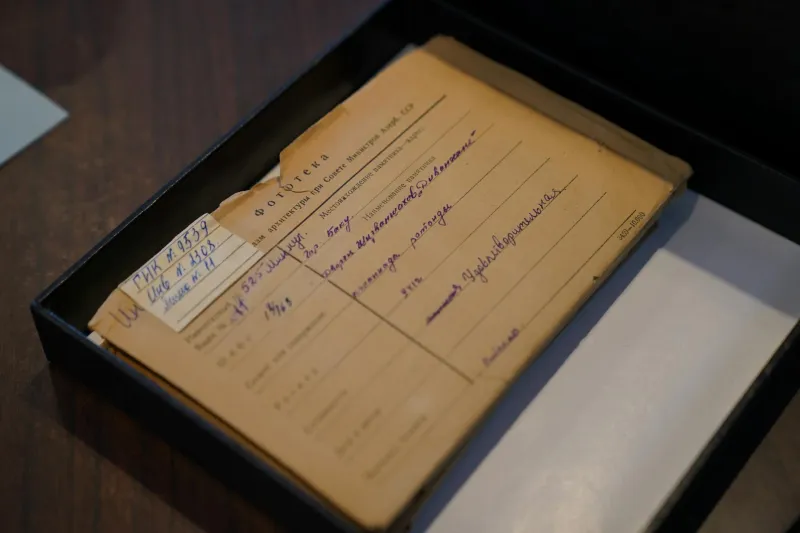
While transcribing coordinates from field notes to the official survey map, Kellerman misread his own handwriting. What should have been marked as "Section 47.3 - Private" became "Section 4.73 - Federal." The error shifted the boundary markers by several miles, accidentally placing the entire Clearwater Basin under federal protection.
"I had terrible handwriting," Kellerman admitted decades later. "My 7 looked like a dot, and my decimal points looked like 7s. It was a disaster waiting to happen."
The Silent Seizure
The mapping error had immediate legal consequences that nobody noticed. Under federal law, any land designated as "federal" on official USGS maps automatically received interim environmental protection until Congress could determine its final status. The Clearwater Basin suddenly became off-limits to logging, mining, and development.
Timberman Resources, which owned most of the affected land, didn't discover the problem until 1971 when they applied for logging permits and were told their property was now federally protected wilderness.
"We sent our crews up there for the spring harvest and found Forest Service rangers blocking the access roads," recalled company president Michael Torres. "They handed us a map showing our own land marked as federal territory. We thought it was some kind of joke."
The Discovery That Changed Everything
When Timberman Resources challenged the designation, federal investigators quickly traced the error back to Kellerman's 1962 survey. The mistake was obvious, embarrassing, and seemingly easy to fix. Congress could simply pass a resolution correcting the map and returning the land to private ownership.
But then environmental groups got involved.
By 1971, the Clearwater Basin had been protected from logging for nearly a decade. Wildlife populations had recovered, rare plant species were thriving, and the ecosystem was beginning to restore itself after generations of timber harvesting. Environmental scientists studying the area described it as a "living laboratory" showing how quickly wilderness could recover when left alone.
The Bureaucratic Calculation
Correcting the survey error would have required congressional action, environmental impact studies, and potentially massive compensation payments to Timberman Resources for a decade of lost logging revenue. The company was demanding $50 million in damages.
Meanwhile, keeping the land as federal territory would cost the government only the price of purchasing it from Timberman at fair market value — about $8 million in 1971 dollars.
The math was simple: fixing the mistake would cost six times more than honoring it.
The Quiet Compromise
Rather than admit the embarrassing error publicly, Congress quietly authorized the purchase of the Clearwater Basin in 1972 as part of a broader wilderness preservation bill. Timberman Resources received fair compensation, environmental groups got a new protected area, and nobody had to explain how a typo had accidentally saved 50,000 acres of old-growth forest.
James Kellerman, the surveyor whose mistake started it all, was quietly transferred to a desk job processing mineral rights applications. He never worked on another land survey.
"They didn't fire me," he recalled. "But they made it clear that my field work days were over. Apparently, I was too dangerous with a pencil."
The Accidental Masterpiece
Today, the Clearwater Wilderness Area is considered one of the crown jewels of Idaho's protected lands. Its old-growth forests harbor endangered species, its rivers run clean, and its trails offer some of the most pristine hiking experiences in the Pacific Northwest.
Federal biologists estimate that without the accidental protection, 90% of the area's old-growth trees would have been logged by 1980. Several species of rare birds and plants that recovered during the "protection gap" might have been lost forever.
"It's the most successful conservation accident in American history," observed Dr. Patricia Williams, a wildlife biologist who has studied the area for three decades. "A sloppy decimal point accomplished more for wilderness preservation than most environmental campaigns."
The Legacy of Productive Incompetence
The Clearwater case became a template for quiet environmental protection. When similar survey "errors" were discovered in other ecologically sensitive areas, Congress often chose to honor the mistakes rather than correct them, especially when the economic and environmental math favored preservation.
James Kellerman, now retired, visits the Clearwater Wilderness Area every summer. He hikes the trails that exist because of his handwriting, camps beside streams that flow clean because of his misplaced decimal point, and watches wildlife that survived because of his bureaucratic bungling.
"I spent my whole career trying to be precise," he reflected. "Turns out the best thing I ever did was make a mistake."
When Errors Become Heritage
The Clearwater Wilderness Area stands as a monument to the strange ways America's natural heritage has been preserved. Not through visionary planning or environmental activism, but through the simple human error of a government surveyor who couldn't read his own handwriting.
Sometimes the most important conservation victories happen not because someone fought for them, but because someone accidentally drew a line in the wrong place and everyone decided it was easier to live with the mistake than fix it.
In the end, 50,000 acres of wilderness were saved by the most mundane force in government: bureaucratic inertia. The typo that was too expensive to correct became the accident that future generations will thank us for making.