When Guessing Goes Wrong on a Continental Scale
Federal surveyor James McKinney had a problem. It was October 1868, winter was approaching, and he was supposed to locate Devil's Creek—a natural landmark that would define the permanent border between the Colorado and Kansas territories. His survey team was behind schedule, supplies were running low, and territorial officials were demanding results.
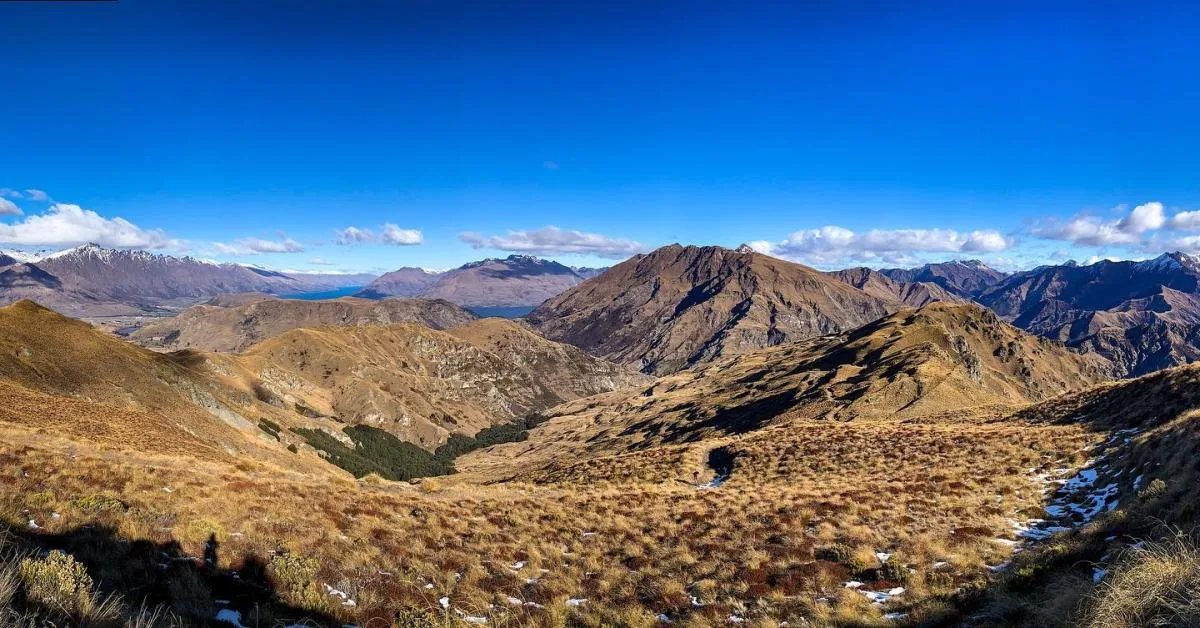 Photo: Devil's Creek, via assets.simpleviewinc.com
 Photo: James McKinney, via polkbusted.com
So McKinney made an educated guess. He estimated Devil's Creek's position based on earlier, incomplete maps and marked the border accordingly. His estimate was wrong by 50 miles, instantly moving approximately 50,000 residents from Kansas to Colorado without their knowledge or consent.
The Survey That Couldn't Wait
The post-Civil War territorial surveys were massive undertakings designed to bring order to America's rapidly expanding western frontier. As territories prepared for statehood, precise borders became crucial for everything from taxation to congressional representation. McKinney's assignment was part of a broader effort to finalize boundaries before Colorado achieved statehood.
Devil's Creek had been chosen as a border landmark because it was supposedly a prominent geographical feature that would remain stable over time. Earlier explorers had noted its position in their journals, but none had conducted precise surveys. McKinney's job was to find the creek, determine its exact coordinates, and establish the official border.
The problem was that Devil's Creek wasn't where anyone thought it was. Decades of map-making based on incomplete information had gradually shifted the creek's assumed position eastward. By 1868, most official maps showed Devil's Creek roughly 50 miles from its actual location.
The Guess That Became Law
Faced with approaching winter and mounting political pressure, McKinney made a decision that would affect thousands of lives. Using the best available maps and his own surveying experience, he estimated Devil's Creek's position and marked the Colorado-Kansas border accordingly.
McKinney's field notes, preserved in the National Archives, reveal his uncertainty: "Devil's Creek not located as per existing maps. Estimated position based on topographical analysis and previous survey data. Weather conditions prevent extended search. Recommend future verification."
Despite McKinney's recommendation for "future verification," territorial officials accepted his survey as final. The estimated border was incorporated into Colorado's statehood documents in 1876, making McKinney's guess legally binding.
The Morning 50,000 People Woke Up Somewhere Else
The error wasn't discovered until 1889, when a railroad company conducting its own survey for a proposed line found the real Devil's Creek 50 miles west of the official border. This meant that a strip of land 50 miles wide and 150 miles long—an area larger than Connecticut—had been incorrectly assigned to Colorado.
The affected region included the thriving town of Sheridan Falls (population 12,000), dozens of smaller communities, three county seats, and thousands of farms and ranches. Residents had been paying Colorado taxes, voting in Colorado elections, and following Colorado law for over a decade, all while technically living in Kansas.
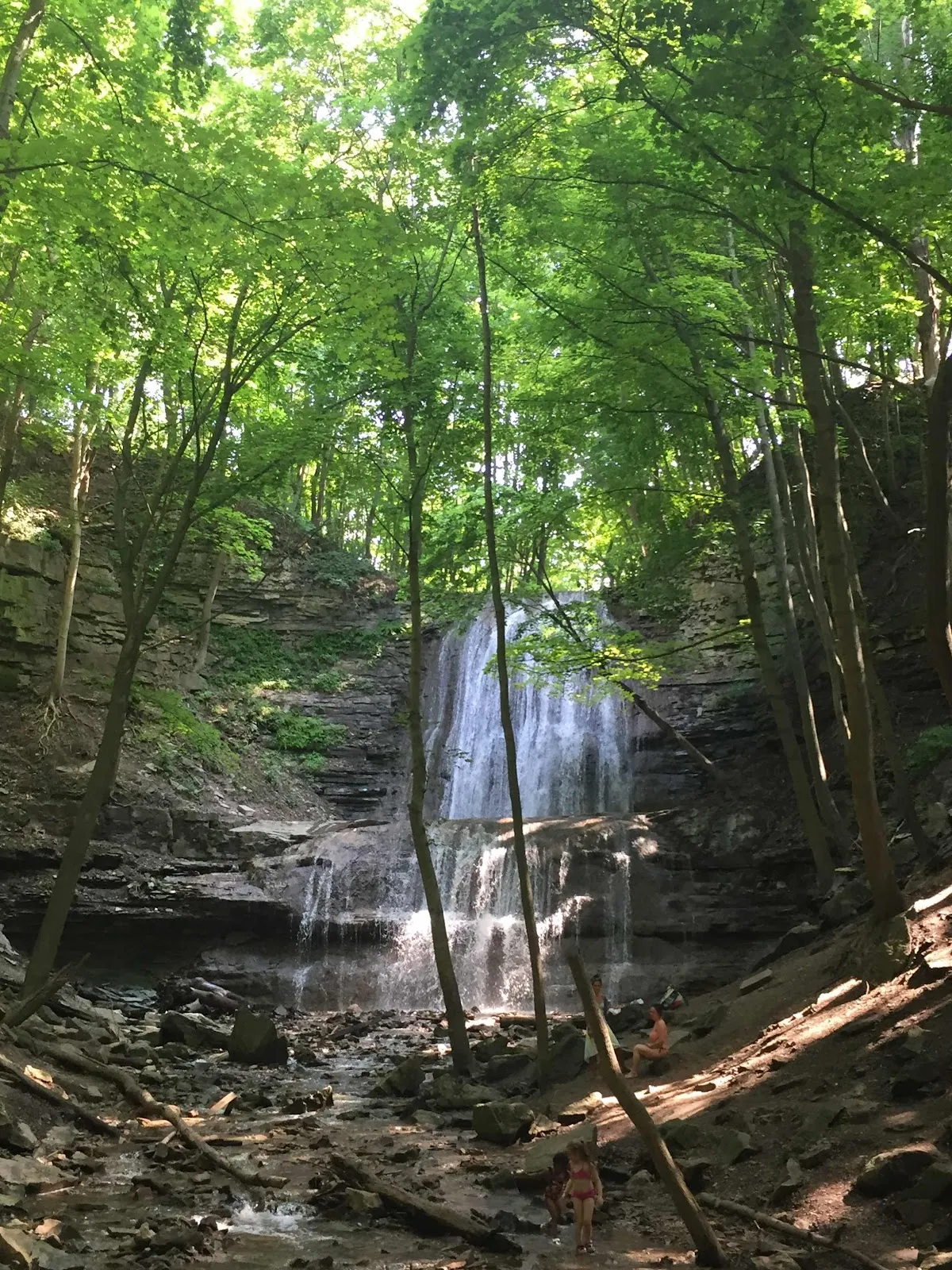 Photo: Sheridan Falls, via lh5.googleusercontent.com
The discovery created immediate chaos. Sheridan Falls residents found themselves subject to Kansas's more restrictive liquor laws, which effectively shut down the town's 23 saloons overnight. Farmers who had been operating under Colorado's generous homestead provisions suddenly faced Kansas's stricter agricultural regulations.
Legal Chaos on an Epic Scale
The border correction triggered a cascade of legal problems that defied easy solution. Property deeds recorded in Colorado courts were now technically invalid, since the land was actually in Kansas. Marriage licenses issued by Colorado officials had questionable legal status. Criminal convictions obtained in Colorado courts were challenged on jurisdictional grounds.
Most complicated were the tax issues. Kansas demanded 13 years of back taxes from residents who had been paying Colorado instead. Colorado refused to refund taxes already collected, arguing that they had provided government services in good faith. Property owners found themselves caught between two states, each claiming the right to tax the same land.
The business implications were staggering. Railroad companies had purchased land rights from Colorado for tracks that now ran through Kansas. Mining claims filed under Colorado law were suddenly subject to Kansas regulations. A lumber company discovered that their sawmill, legally established in Colorado, was operating without proper Kansas permits.
The Solution That Satisfied Nobody
After three years of legal battles, Congress intervened with a compromise that pleased no one. Rather than forcing mass relocation or invalidating thousands of legal documents, they decided to split the disputed territory. The eastern half would remain with Kansas, while the western half stayed with Colorado. The new border ran roughly through the middle of the disputed region—still nowhere near the actual Devil's Creek.
This "solution" created new problems. Sheridan Falls was literally divided in half, with Main Street becoming the state border. Residents on the north side of the street woke up in Kansas, while their neighbors across the street remained in Colorado. The town had to establish separate municipal governments, police forces, and school systems.
Families found themselves split between states. The Johnson family farm straddled the new border, with their house in Colorado and their barn in Kansas. They were required to pay property taxes to both states and follow different agricultural regulations for different sections of their land.
The Problems That Never Got Fixed
More than 150 years later, McKinney's surveying error continues to create complications. The compromise border established in 1892 was itself imprecisely surveyed, leading to ongoing disputes about exact property lines. Several parcels of land remain in legal limbo, with ownership claims that can't be definitively resolved.
The real Devil's Creek, finally located in 1889, sits in what is now undisputedly Colorado territory. A small historical marker notes its significance, but few visitors understand that this unremarkable stream was supposed to be one of America's major state borders.
Modern GPS technology has revealed additional surveying errors in the 1892 compromise border. Some property lines are off by several hundred feet, creating title disputes that require expensive legal resolution. Real estate transactions in the area still require specialized surveys to ensure buyers actually own what they think they're purchasing.
The Lesson of the Lost Border
James McKinney's educated guess demonstrates how individual decisions can have massive, unforeseen consequences. His single day of estimation in 1868 affected generations of families, reshaped local economies, and created legal complications that persist today.
The story also reveals the dangerous permanence of official mistakes. Once McKinney's survey became part of Colorado's statehood documents, correcting the error became exponentially more difficult than making it had been. The administrative convenience of accepting his estimate ultimately created decades of administrative nightmares.
Most remarkably, McKinney himself never learned about his error's consequences. He died in 1885, four years before the true location of Devil's Creek was discovered. His personal papers, donated to the Colorado Historical Society, show he remained proud of his surveying work until the end of his life.
Today, the Colorado-Kansas border serves as a permanent reminder that sometimes the most consequential decisions in American history were made by individuals who had no idea how wrong they were getting it. In a country built on precise legal boundaries, McKinney's story proves that even our most fundamental geographical facts might be based on nothing more than one person's best guess on a cold October day.