The Mistake That Stuck
In the rolling hills of western Pennsylvania, there sits a small borough whose very existence proves that sometimes the most permanent things in life are complete accidents. The town of Normalville bears a name that sounds perfectly reasonable — until you learn it was supposed to be called something entirely different.
When the community's founders gathered in 1876 to file their official incorporation paperwork, they had chosen the name "Normalville" to honor the Normal School they hoped to establish. Normal schools, as they were called in the 19th century, were teacher training institutions that represented education and progress. It was a fitting name for a community that prided itself on learning and civic improvement.
But somewhere between the town meeting and the county courthouse, a clerical error transformed their carefully chosen name into "Normalville" — with an extra 'l' that would haunt the community for generations.
When Fixing Things Makes Them Worse
The mistake should have been simple to correct. After all, it was just one letter in a government filing. But as the town's early leaders quickly discovered, bureaucracy has a way of making the simple impossibly complex.
Their first attempt to fix the error came in 1878, just two years after incorporation. The town council voted unanimously to correct the spelling, filed the proper paperwork with the state, and waited for confirmation. Months passed. Then a year. The state capitol, apparently overwhelmed with post-Civil War reconstruction paperwork, never responded.
A second attempt in 1883 met an even stranger fate. The correction paperwork was filed, processed, and officially approved — but somehow the approval letter itself contained the same spelling error. State officials had dutifully corrected "Normalville" to "Normalville," apparently not noticing they were changing nothing at all.
By 1891, the town had tried four separate times to fix their name through official channels. Each attempt either disappeared into bureaucratic limbo or resulted in new paperwork that somehow perpetuated the original mistake.
The Psychology of Permanent Errors
As the 1890s wore on, something curious began happening in Normalville. Residents stopped referring to the spelling as a "mistake" and started calling it their "official name." Local businesses began using the incorrect spelling on their signs. The post office, which had been quietly delivering mail addressed to both spellings, officially adopted "Normalville" as the community's postal designation.
The transformation wasn't immediate or unanimous. Town meeting minutes from 1894 show heated debates between "correctionists" who wanted to keep fighting the spelling error and "acceptists" who argued the community should embrace what had become their legal identity.
The acceptists won, but not through any formal vote. They won through exhaustion.
When Wrong Becomes Right
By 1900, Normalville had effectively given up on being Normalville. The town's official letterhead, business directories, and even the sign at the train depot all bore the "incorrect" spelling. A generation of children had grown up learning to spell their hometown's name with the extra letter.
The final nail in the coffin came in 1903, when the town applied for federal funding to improve their main road. The application, filed under the name "Normalville," was approved without question. Federal money flowed into the community under their "wrong" name, creating a paper trail that would have made any future correction exponentially more complicated.
Local historian Margaret Thornfield, writing in 1912, captured the community's resigned acceptance: "We have become a town defined not by what we intended to be, but by what a clerk's pen made us. Perhaps there is wisdom in accepting that identity, like spelling, is sometimes beyond our control."
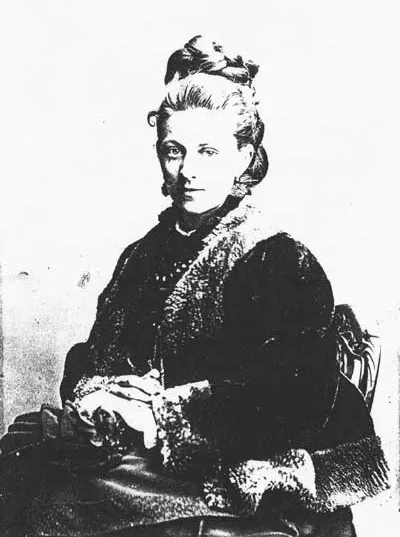 Photo: Margaret Thornfield, via www.thepuginsociety.co.uk
The Legacy of Bureaucratic Accidents
Today, Normalville, Pennsylvania, exists exactly as that 1876 paperwork intended — with the "wrong" spelling that became the only spelling that mattered. The town's welcome sign proudly displays the name that was never supposed to exist, and local residents have long since stopped explaining the historical irony to visitors.
The Normal School that inspired the original name was never built. The community college that eventually served the area was located in a neighboring town. But Normalville endures, a living testament to the strange permanence of clerical errors and the surprising adaptability of human identity.
In the end, the residents of Normalville discovered something profound about the nature of names and belonging: sometimes who you are isn't determined by who you meant to be, but by who the paperwork says you are. And sometimes, that's perfectly fine.