The Nevada Town That Vanished Into Thin Air Every Night for Four Decades
The Town That Shouldn't Have Been
Imagine living in a place where every parking ticket issued after sunset was legally meaningless, where midnight marriages couldn't be legally performed by the local justice of the peace, and where technically speaking, the fire department had no authority to respond to emergency calls in the dark. This wasn't some fever dream of bureaucratic absurdity—it was daily life in Millerville, Nevada, from 1923 to 1963.
The story begins with what might be the most consequential typo in American municipal history. When Millerville filed for incorporation in 1883, a harried territorial clerk made a seemingly innocent error. Instead of writing that the town's legal status would be "perpetual," he accidentally wrote "diurnal"—meaning daily. The paperwork was approved, filed, and forgotten.
A Legal Phantom in the Desert
For nearly four decades, nobody noticed that Millerville technically dissolved itself every night at midnight and reconstituted at sunrise. The town went about its business: electing mayors, collecting taxes, issuing permits, and enforcing ordinances. Children attended the local school, the volunteer fire department responded to emergencies, and the town's single police officer wrote tickets and made arrests.
But according to the letter of the law, none of it should have been legally valid after dark.
The situation was so bizarre that it defied common sense. Every contract signed after sunset existed in a legal gray zone. Every municipal decision made during evening town council meetings had questionable authority. Even the town's street lights—ironically enough—were installed through ordinances that technically had no legal backing during the hours when they were actually needed.
The Judges Who Looked the Other Way
What makes this story even stranger is that several people in positions of authority knew about the problem but chose to ignore it. At least three different Nevada district judges encountered cases involving Millerville's nighttime legal status between 1925 and 1960. Each time, they quietly ruled in favor of common sense rather than legal technicality.
Judge Harold Wickham, who served the district from 1934 to 1952, later admitted he'd seen the incorporation papers during a property dispute in 1941. "I figured if I brought it up, it would create more problems than it solved," he told a reporter years later. "The town was functioning fine. Why upset the apple cart over a clerk's spelling mistake from sixty years ago?"
This gentlemen's agreement to ignore the obvious worked perfectly until 1963, when an ambitious young lawyer named Robert Chen decided to challenge a property seizure by examining every piece of paperwork in Millerville's municipal history.
The Discovery That Nearly Unraveled Everything
Chen was representing a client whose property had been condemned by the town council during a late-night emergency session in 1962. While researching the case, he discovered the incorporation error and realized he'd stumbled onto something extraordinary. If Millerville legally ceased to exist every night, then the midnight condemnation meeting had no authority to seize anyone's property.
But Chen quickly realized the implications went far beyond his client's case. If he successfully argued that the town had no legal authority after dark, it could potentially invalidate thousands of municipal actions spanning four decades. Property transfers, business licenses, even birth and death certificates issued by the town clerk during evening hours could all be called into question.
The Bureaucratic Earthquake
When Chen filed his motion in September 1963, it sent shockwaves through Nevada's legal system. The state attorney general's office immediately launched an investigation, while Millerville's panicked town council called an emergency meeting—carefully scheduled for 2 PM to ensure legal validity.
The potential chaos was staggering. The town's records showed that roughly 30% of all municipal business had been conducted during evening hours over the previous four decades. Marriage licenses issued after sunset, property deeds notarized during night shifts, even parking tickets written under street lights—all of it could be legally meaningless.
Governor Grant Sawyer called it "the most ridiculous situation in Nevada history" and immediately ordered the state legislature into emergency session.
The Midnight Fix
On December 15, 1963, Nevada lawmakers passed what they unofficially called the "Millerville Midnight Act"—a piece of retroactive legislation that officially recognized all municipal actions taken by the town since 1883, regardless of the time of day. The law also corrected the original incorporation papers, finally making Millerville's existence legally perpetual rather than daily.
The legislation passed unanimously, with one senator noting that "if we can't fix a spelling mistake after eighty years, we probably shouldn't be in government."
The Lasting Legacy
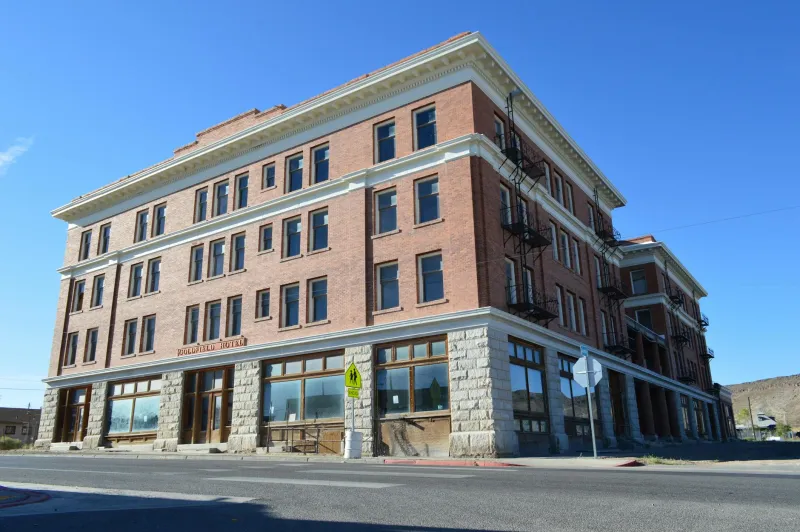
Today, Millerville is a ghost town—not because of legal technicalities, but because the silver mines that created it ran dry in the 1970s. But the story lives on as a perfect example of how America's complex legal system can create situations so absurd they seem almost fictional.
The case is still cited in law schools as an example of how "de facto" municipal authority can override "de jure" legal status when common sense and public interest are at stake. It's also a reminder that sometimes the most important government functions happen not in spite of bureaucratic errors, but because reasonable people choose to ignore them.
In the end, Millerville's four-decade legal limbo proves that American democracy is surprisingly resilient—even when it technically doesn't exist for eight hours every night.