The Ghost Job That Paid for Nearly Two Decades: When Federal Bureaucracy Forgot About a Burned Lighthouse
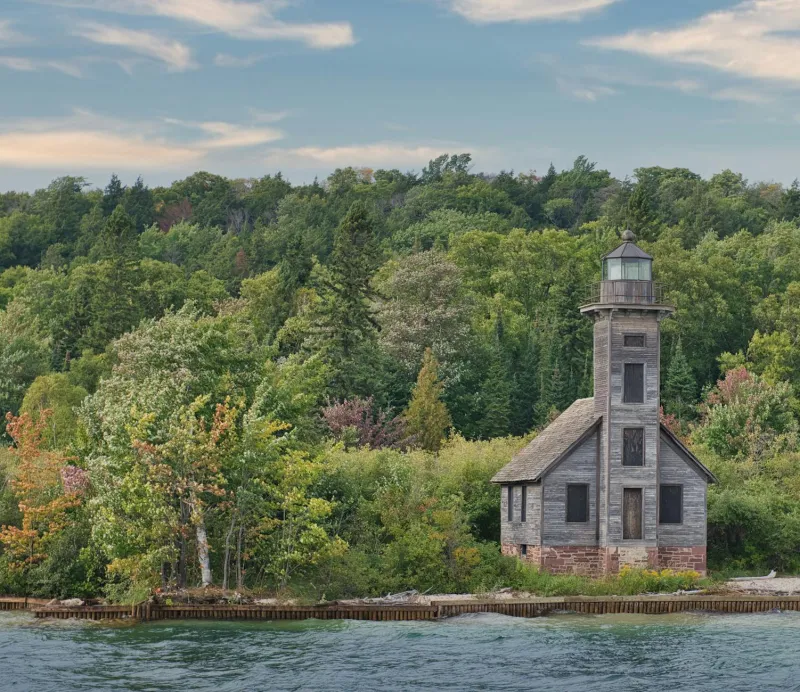
The Keeper of Nothing
Somewhere in the federal archives sits one of the most expensive clerical oversights in American history: 17 years of salary payments to a man whose job was to maintain a lighthouse that had burned to the ground.
The story begins in 1883 on the shores of Lake Huron, where the Presque Isle Light Station had guided ships safely through treacherous waters for over two decades. Then came the fire that changed everything—except, apparently, the federal payroll system.
 Photo: Lake Huron, via fishingbooker.com
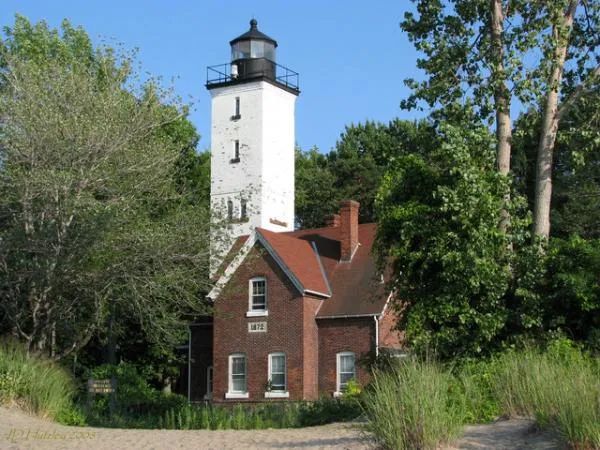 Photo: Presque Isle Light Station, via photos.wikimapia.org
When Fire Meets Bureaucracy
The blaze that consumed the Presque Isle lighthouse was swift and complete. Local newspapers reported that the wooden structure, weakened by years of harsh lake weather, went up "like a torch" on a particularly windy October evening. By morning, nothing remained but a blackened foundation and the twisted metal remnants of the beacon assembly.
For lighthouse keeper Thomas Morrison, it should have been the end of his federal employment. The lighthouse was gone. His quarters were ash. There was, quite literally, nothing left to keep.
 Photo: Thomas Morrison, via i.pinimg.com
But Morrison had underestimated the power of bureaucratic inertia.
The Paper Trail That Wouldn't Die
Here's where the story gets wonderfully absurd. In the 1880s, the federal government operated through a maze of overlapping departments, each maintaining its own records with minimal coordination. The Lighthouse Board managed operations and personnel. The Treasury Department handled payroll. The Army Corps of Engineers dealt with construction and major repairs.
When the Presque Isle lighthouse burned down, the local Lighthouse Board inspector dutifully filed a report noting the structure's destruction. The report made its way through proper channels, was reviewed, stamped, and filed away in Washington.
But somehow, nobody thought to notify payroll.
The Checks Keep Coming
Morrison, suddenly unemployed but still receiving his monthly federal salary, faced an interesting moral dilemma. He'd reported the fire to his supervisors. He'd watched them inspect the charred remains. Surely someone would figure out that paying a lighthouse keeper without a lighthouse was problematic.
Months passed. The checks kept arriving.
Morrison, a practical man, decided that if the federal government wanted to pay him for doing nothing, he wouldn't argue. He found other work in town—carpentry, fishing, odd jobs—while continuing to cash his lighthouse keeper paychecks.
The Phantom Maintenance Reports
What makes this story even stranger is that Morrison continued filing the required monthly maintenance reports. For 17 years, he submitted paperwork documenting the upkeep of a lighthouse that existed only in federal records.
"Beacon operational," he'd write. "Weather damage minimal." "Supplies adequate."
The reports traveled through the same bureaucratic channels as always, were reviewed by the same clerks, and were filed in the same cabinets. Nobody seemed to notice that the lighthouse being so meticulously maintained had been reduced to rubble nearly two decades earlier.
The System That Forgot Itself
How did this happen? The answer lies in the beautiful inefficiency of 19th-century federal administration.
The Lighthouse Board knew the lighthouse was gone—they had the destruction report. But they assumed Treasury would stop payments once notified. Treasury kept paying because they never received stop-payment orders. The local inspector who filed the original fire report was transferred to another district and replaced by someone who'd never seen the lighthouse when it actually existed.
Meanwhile, Morrison's fake maintenance reports created their own paper trail, suggesting to anyone who bothered to check that the lighthouse was not only still standing but operating smoothly.
The Discovery
The scam—if you can call it that when the victim is enthusiastically paying—finally unraveled in 1900 when a new Treasury Department efficiency expert decided to audit lighthouse expenditures.
The audit was supposed to be routine, but this particular accountant was unusually thorough. He noticed that Presque Isle Light Station had remarkably low supply costs and had never requested major repairs despite operating in harsh Great Lakes weather for decades.
Intrigued, he decided to visit.
What he found was a foundation covered in weeds and a very surprised former lighthouse keeper who'd been collecting federal paychecks for maintaining a pile of rubble.
The Aftermath
The government's response was surprisingly measured. Morrison had technically committed fraud, but federal officials were embarrassed by their own incompetence. Prosecuting him would mean publicly admitting that the government had failed to notice paying someone to maintain a nonexistent lighthouse for 17 years.
Instead, they quietly terminated his employment and wrote off the payments as an administrative error. Morrison kept the money he'd already received—nearly $8,000, equivalent to about $250,000 today.
The Bureaucratic Lesson
The Presque Isle incident became legendary within federal circles, though it was never widely publicized. It highlighted the dangers of departmental silos and inadequate communication between agencies managing different aspects of the same operations.
More importantly, it demonstrated how institutional momentum can override common sense. Once Morrison was in the system as a lighthouse keeper, the system kept treating him as a lighthouse keeper, regardless of whether he had a lighthouse to keep.
The Man Who Beat the System by Accident
Thomas Morrison never set out to defraud the federal government. He simply found himself in the bizarre position of being paid for a job that no longer existed and decided not to rock the boat.
In a strange way, he provided a public service by exposing the flaws in federal record-keeping that allowed such oversights to persist. His 17-year phantom employment became a case study in administrative reform.
The Lighthouse That Lives On
Today, there's a new lighthouse at Presque Isle—built in 1905, five years after Morrison's employment finally ended. But somewhere in the National Archives, filed away with thousands of other bureaucratic curiosities, sit Morrison's monthly reports documenting the maintenance of a lighthouse that existed only in paperwork.
They're a reminder that sometimes the most unbelievable stories aren't about what people did, but about what massive bureaucracies somehow failed to notice.