
When Death Becomes a Technicality
Most people assume that dying automatically disqualifies you from public service. The residents of Elkhorn, Montana discovered this assumption was dangerously wrong when their newly elected police chief, Frank Morrison, suffered a fatal heart attack on November 15, 1987—just three days before his official swearing-in ceremony.
 Photo: Frank Morrison, via i.pinimg.com
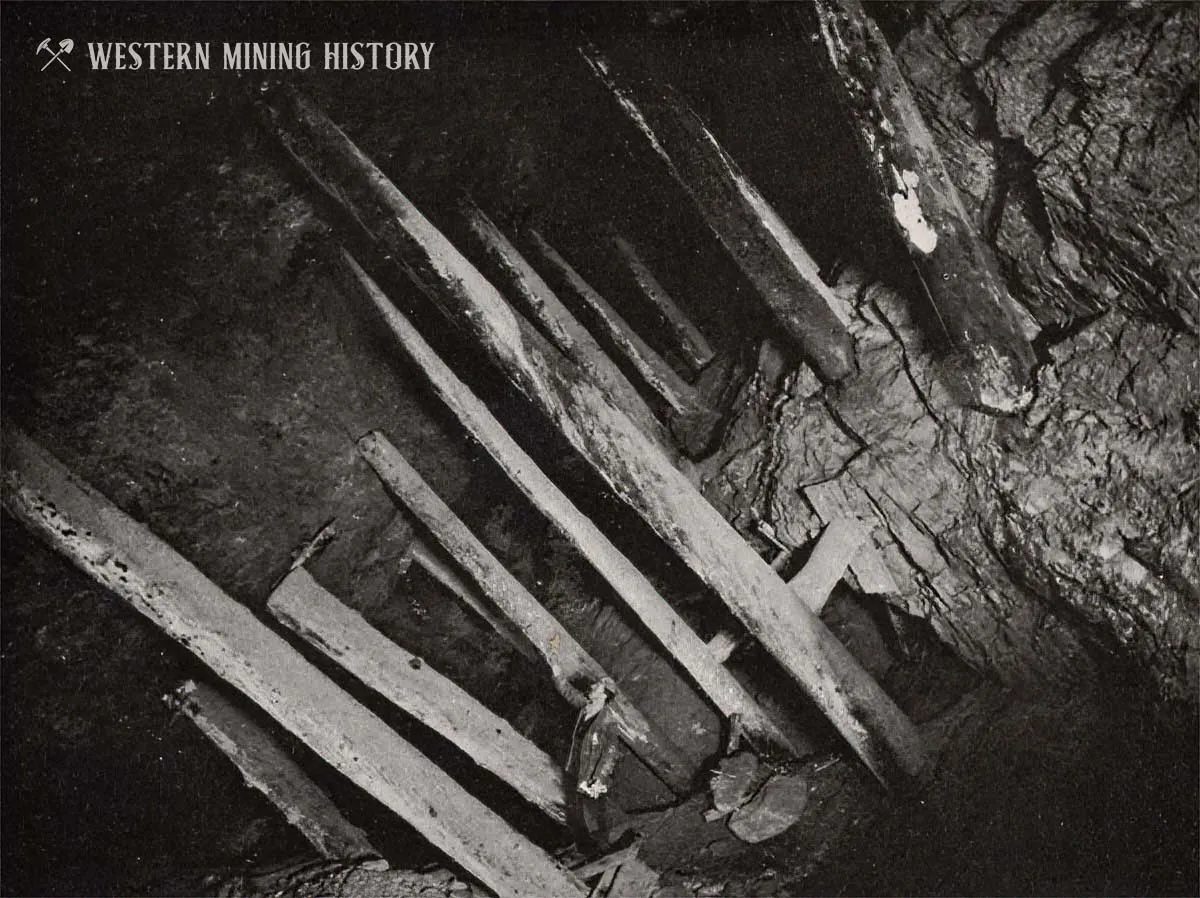 Photo: Elkhorn, Montana, via westernmininghistory.com
What should have been a straightforward tragedy became an eight-month administrative nightmare that left the town's law enforcement in legal limbo and Morrison drawing a steady paycheck from beyond the grave.
The Paperwork Problem
Morrison had won the election by a comfortable margin, defeating the incumbent chief who had grown unpopular after a series of questionable arrests. The town council had already processed his employment paperwork, set up his benefits, and scheduled his swearing-in for November 18th. When Morrison died, everyone assumed the obvious next step was to cancel everything and hold a special election.
That's when they discovered Montana's municipal employment laws contained a fascinating loophole. According to state statute, an elected official only becomes "officially deceased in office" after they've been sworn in. Since Morrison died before taking the oath, he was legally neither alive nor officially dead in his capacity as police chief—he existed in a bureaucratic purgatory.
The town clerk, Helen Vasquez, later admitted she had no idea what forms to file. "I called the county, I called the state, I even called the governor's office," she told the Billings Gazette years later. "Nobody could tell me how to fire a dead man who was never technically hired."
 Photo: Helen Vasquez, via ahscougarcall.com
Eight Months of Phantom Leadership
While lawyers debated Morrison's employment status, Elkhorn's police department continued operating under the assumption that someone was in charge. Deputy Chief Robert Henley took over day-to-day operations, but couldn't officially promote himself or make budgetary decisions without approval from his technically-nonexistent boss.
The situation created increasingly absurd scenarios. When Henley needed to purchase new equipment, he had to submit requisition forms to Morrison's empty office. Town council meetings included agenda items for "Police Chief Morrison's report," which Henley would deliver on behalf of his deceased superior. Morrison's nameplate remained on his office door, his parking space stayed reserved, and his secretary continued routing phone calls to a desk that would never again be occupied.
Most remarkably, Morrison's paychecks continued to be processed and deposited into his estate account. His widow, initially confused by the ongoing payments, was advised by her lawyer not to return the money until the town formally resolved Morrison's employment status.
The Investigation That Solved Everything
The bizarre situation might have continued indefinitely if not for a routine state audit in July 1988. When auditors discovered Elkhorn was paying salary and benefits to an employee who had been dead for eight months, they demanded immediate clarification.
The audit forced the town to confront their legal limbo head-on. After consulting with the state attorney general's office, they learned that Morrison could be retroactively "terminated due to incapacitation" as of his date of death, despite never having officially started.
The resolution required a special town council vote, three different legal opinions, and the creation of new municipal procedures for handling similar situations in the future. Morrison was officially terminated on July 22, 1988, exactly eight months and seven days after his death.
The Ripple Effects
Morrison's posthumous employment had unexpected consequences beyond the obvious financial ones. During his eight months of phantom service, several arrests made under Henley's authority were challenged in court on the grounds that Henley lacked proper authorization to act as police chief. Two cases were dismissed, and one convicted felon successfully appealed his sentence.
The Montana legislature, embarrassed by the national attention the story received, quietly amended state municipal employment laws in 1989 to clarify that death automatically terminates all public employment, regardless of swearing-in ceremonies or oath-taking schedules.
Why This Matters More Than You Think
Elkhorn's eight-month experiment with posthumous government employment revealed a troubling truth about American bureaucracy: our systems are often so complex that they can continue functioning even when the humans supposedly running them disappear entirely.
Similar situations have occurred across the country, though rarely for such extended periods. In 2003, a deceased county commissioner in Arkansas continued voting on municipal bonds for three weeks after his death because his family didn't want to interrupt an important infrastructure project. A school district in Ohio discovered in 2015 that they had been paying a superintendent who died in 1987, the result of a payroll computer glitch that nobody had noticed for nearly three decades.
Frank Morrison may have been the only police chief in American history to serve an entire term while dead, but he wasn't the only public official to discover that death is sometimes just another administrative hurdle. In a country where bureaucracy can outlive the bureaucrats, perhaps the most surprising thing about Morrison's story isn't that it happened—it's that it doesn't happen more often.